

What if the most dangerous part of stopping isn’t a lack of willpower, but a lack of medical science? For too long, you may have believed that if you were just stronger, you could overcome this on your own. That struggle, and the fear that comes with it, is something we understand completely.
The anxiety about withdrawal isn’t just in your head; it’s a valid, biological response to a complex neurological process. The risk of seizures or severe complications is real, and it has nothing to do with your character. It’s about your brain chemistry. This article is here to replace that fear with facts, revealing The Science of Medical Detox: How Clinics Manage Withdrawal Safety. We promise to show you the precise, evidence-based protocols and advanced medical support that leading clinics, including those at Detox Rehab Clinics UK, are using in 2026 to protect your health and ensure your comfort.
You’ll learn about the specific medications that prevent the worst symptoms, the 24/7 clinical monitoring that keeps you safe, and why a medically-supervised detox is the only path to beginning your recovery with confidence and dignity.
Key Takeaways
- Understand the precise neurological reason why stopping suddenly is dangerous and how specific medications are used to gently rebalance your brain chemistry for a safe withdrawal.
- Discover what CQC-regulation truly means for your safety and get a clear picture of the 24/7 medical supervision provided in London’s leading private clinics.
- Learn the step-by-step clinical process, from your initial comprehensive assessment to the moment your system begins to stabilise, demystifying the entire detox journey.
- Grasp The Science of Medical Detox: How Clinics Manage Withdrawal Safety by learning how tailored pharmacological protocols are matched to your unique biological and personal needs.
The Neurobiology of Withdrawal: Why Your Brain Needs Medical Support
When you decide to stop using a substance your body has become dependent on, you’re not just fighting a habit; you’re contending with a profound neurological imbalance. Medical detox is not about a lack of willpower. It is a controlled, evidence-based pharmacological intervention designed to manage a brain in crisis. It’s a process where we, as clinicians, work with your body’s chemistry to bring you back to a state of equilibrium safely and with dignity.
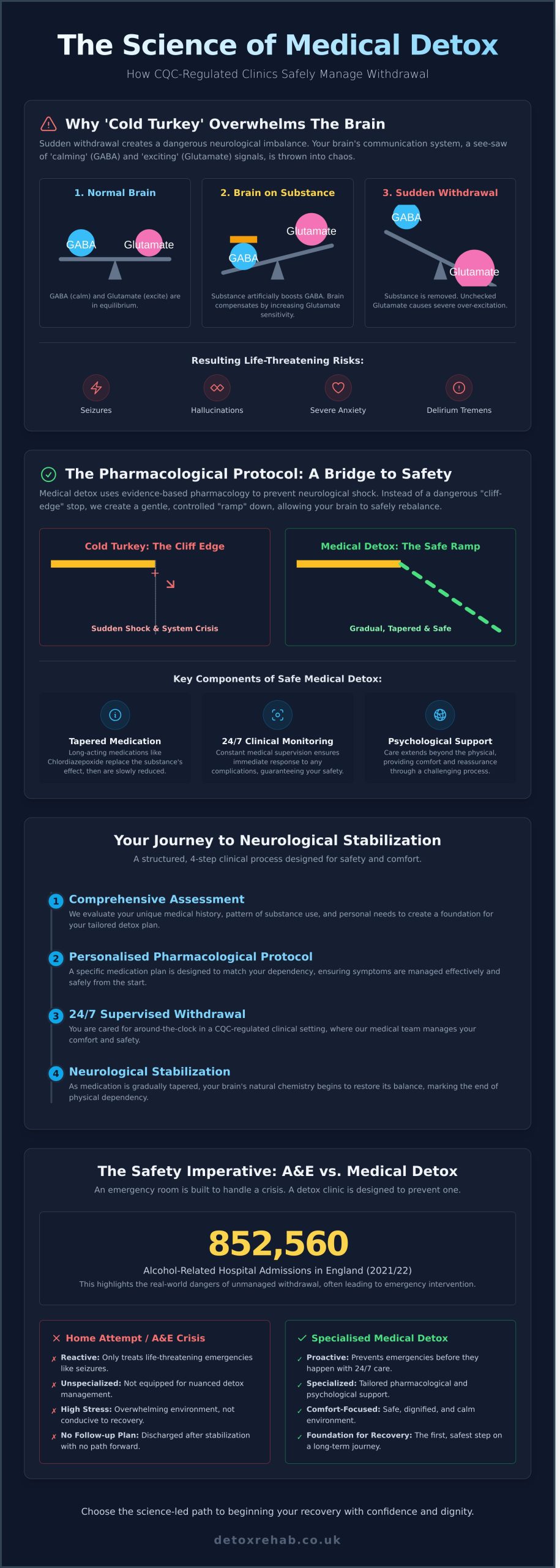
Think of your brain’s activity as a finely tuned see-saw. On one side, you have GABA, the primary neurotransmitter that acts as a brake, calming your nervous system. On the other, you have glutamate, the accelerator that excites it. Many substances, particularly alcohol and benzodiazepines, artificially press down on the GABA side, creating a powerful sedative effect. To compensate, your brain desperately tries to rebalance the see-saw. It reduces its natural GABA production and makes itself more sensitive to glutamate. This complex process, detailed in studies on The Neurobiology of Withdrawal, is why professional oversight is critical.
When you suddenly stop using the substance, the artificial weight on the GABA side is lifted. The brake is gone, but the accelerator is still floored. This is the ‘rebound effect’: a sudden, dangerous surge in neurological activity. This isn’t just unpleasant; it’s a medical emergency that can lead to severe anxiety, hallucinations, life-threatening seizures, and Delirium Tremens (DTs). In our London clinics, our primary focus is on preventing this. We use specific medications in a tapered protocol to gently re-introduce a calming influence, allowing your brain the time it needs to restore its natural balance without the shock of a sudden stop.
The Science of Chemical Dependency
Over time, your brain’s constant effort to counteract the substance’s effects leads to physical changes. Through a process called neuroplasticity, neural pathways are rewired to function in the presence of the drug. Your brain reduces its own production of calming chemicals because it has come to rely on an external source. Neuroadaptation is the brain’s attempt to find a new ‘normal’ under the constant influence of a substance, a state that makes its absence feel dangerously abnormal.
Why ‘Cold Turkey’ is a Medical Risk in London
Attempting to withdraw without medical supervision in a domestic setting is exceptionally dangerous. The physiological stress can be overwhelming and unpredictable. The scale of this risk is reflected across the UK; in 2021/22, NHS Digital recorded an estimated 852,560 hospital admissions in England where alcohol was a primary or secondary factor. While a London A&E can stabilise an acute crisis like a seizure, it is not a substitute for a specialised detox clinic. Emergency rooms are built for immediate, life-saving intervention, not the 24/7 monitoring, psychological support, and nuanced medication management that defines The Science of Medical Detox: How Clinics Manage Withdrawal Safety. In our care, you are not just a patient in a queue; you are an individual receiving a bespoke plan for a safe and comfortable recovery.
The Pharmacological Protocol: How London Clinics Stabilize the System
Stepping away from a substance sends the central nervous system into a state of alarm. After prolonged dependence, your brain has adapted, and its sudden absence creates a volatile, often dangerous, chemical imbalance. This is where pharmacology becomes a life-saving tool. Understanding the science of medical detox: how clinics manage withdrawal safety begins with the carefully managed use of medication to protect your brain and body, allowing them to recalibrate without trauma.
For individuals detoxing from alcohol or benzodiazepines, the primary risk is severe neurological over-excitation. These substances enhance the activity of GABA, the brain’s main calming neurotransmitter. When they are removed, the brain rebounds with a surge of adrenaline and glutamate, leading to tremors, extreme anxiety, hallucinations, and potentially life-threatening seizures. To prevent this, our clinical teams use long-acting benzodiazepines like Chlordiazepoxide (Librium) to safely manage this process, a practice supported by official NHS guidelines on alcohol detox. These medications gently calm the nervous system, acting as a bridge that allows your brain to gradually return to a stable state.
Beyond neurological stability, we immediately address the physical depletion caused by substance use. Chronic alcohol consumption, for example, severely inhibits the body’s ability to absorb thiamine (Vitamin B1), a deficiency that can lead to Wernicke-Korsakoff syndrome, a form of permanent brain damage. Standard protocol in our London clinic involves administering high-dose Pabrinex (a potent mix of B and C vitamins) for the first 3 to 5 days, alongside IV fluids to restore hydration and correct critical electrolyte imbalances that protect your heart.
Common Medications Used in Medical Detox
Your detox plan is built around specific, evidence-based medications. For alcohol withdrawal, Chlordiazepoxide and Diazepam are the gold standard due to their long half-life and proven safety profile. For opioids, we use medications like Buprenorphine, a partial opioid agonist that eases withdrawal symptoms and cravings without producing a high. To manage your comfort, we also provide targeted medications like anti-emetics for nausea and non-addictive pain relief for body aches.
Bespoke Dosing: Tailoring Science to the Individual
There is no one-size-fits-all dosage. Our London clinicians calculate your initial medication levels based on your body mass index (BMI), the quantity and duration of your substance use, and metabolic health indicators from your initial assessment. We favour a symptom-triggered regime over a fixed-dose schedule, allowing our 24/7 nursing team to respond directly to your withdrawal scores. This is what ‘bespoke care’ truly means: adjusting your medicine in real-time based on your unique biological response. This level of personalised care is the foundation of a truly effective detox programme, ensuring you receive precisely what you need, exactly when you need it.
Constant monitoring is the cornerstone of the science of medical detox: how clinics manage withdrawal safety. Your vital signs, particularly blood pressure and heart rate, are checked every 2 to 4 hours in the initial, acute phase. A rising heart rate or sudden spike in blood pressure is a clear biological marker of escalating withdrawal severity, allowing our medical team to intervene with adjusted medication long before the situation becomes critical. It’s this proactive, data-driven approach that transforms a dangerous process into a managed, safe, and healing journey.
Safety Standards and Clinical Oversight in London Facilities
When you place your trust in a medical detox clinic, you aren’t just hoping for comfort; you are expecting clinical excellence and uncompromising safety. In London, this expectation is underpinned by rigorous national standards and a concentration of medical talent that is unique in the UK. Understanding these safety nets is the first step towards feeling secure in your decision to begin healing. It’s how you know that every part of your journey is managed by experts dedicated to your well-being.
The entire process is built on a foundation of medical science and compassionate oversight. This isn’t just about getting through withdrawal. It’s about doing so in a way that protects your body and mind, setting the stage for a lasting recovery. Let’s look at the specific structures that ensure your safety is the absolute priority.
CQC Ratings: The London Benchmark for Safety
In England, every independent clinic, hospital, and care service is legally required to be registered with the Care Quality Commission (CQC). The CQC is the independent regulator, and its inspection reports are your most powerful tool for verifying a clinic’s quality. They assess services against five key questions, but for detox, the most critical are:
- Is it Safe? This checks for protection from abuse and avoidable harm, including medication management and the cleanliness of the environment.
- Is it Effective? This ensures your care, treatment, and support achieve good outcomes and are based on the best available evidence.
- Is it Well-led? This looks at the leadership and governance of the organisation to make sure it’s providing high-quality care that’s encouraged to improve.
A rating of ‘Good’ or ‘Outstanding’ from the CQC is a clear indicator of a high-quality facility. You can, and should, verify any London clinic’s registration and read their latest inspection report directly on the CQC website before making any commitment. This transparency is non-negotiable.
This reliance on independent, accredited bodies to verify safety and quality is a critical principle that extends beyond healthcare. For instance, in fields where material integrity is paramount, experts check out The Testing Lab PLC to ensure components meet stringent safety standards, reinforcing the universal value of third-party validation.
The Clinical Team: Who is Managing Your Safety?
True safety comes from the people overseeing your care. In a leading London detox facility, you are supported by a multidisciplinary team, not just a single GP. This is a core tenet of The Science of Medical Detox: How Clinics Manage Withdrawal Safety. Your team will typically include:
- Consultant Psychiatrists: Specialists in addiction medicine who diagnose co-occurring mental health conditions and create your bespoke medication plan.
- Registered General Nurses (RGNs): These nurses manage your physical health, monitor vital signs like blood pressure and heart rate, and administer medications precisely on schedule.
- Registered Mental Health Nurses (RMNs): Experts in psychological distress, RMNs provide crucial emotional support and help manage the anxiety and agitation that can accompany withdrawal.
This collaborative approach ensures that both your physical and psychological needs are met simultaneously. The daily operations are often orchestrated by a ‘Lead Nurse’ who ensures your stabilisation plan is followed perfectly. This clinical model is grounded in decades of research, with protocols outlined in authoritative resources like The Science of Medical Detoxification. London’s unique advantage is its direct access to this world-class talent, often affiliated with renowned teaching hospitals.
Crucially, elite clinics have a doctor physically on-site 24/7, not just ‘on-call’. This distinction is vital. An on-site doctor can respond to an unexpected medical issue, such as a seizure or a sudden spike in blood pressure, in seconds. An on-call GP might take 30 minutes or more to arrive. In a medical emergency, that time can make all the difference. Top-tier London clinics are also equipped with advanced life support equipment and have established emergency protocols with nearby NHS A&E departments, ensuring you are in the safest possible hands should the unexpected happen.
The Detox Journey: From Admission to Neurological Stabilization
Stepping into a detox clinic is a profound act of courage. We honour that by ensuring your journey with us is grounded in safety, dignity, and clinical excellence from the very first moment. The process of withdrawal is a highly individual experience, dictated by your unique physiology and history. That’s why our approach is not one-size-fits-all; it’s a meticulously planned medical protocol designed to bring your body and mind back to a state of balance. This structured, medically-supervised process is the core of the science of medical detox: how clinics manage withdrawal safety.
This journey begins even before you walk through our doors. Arranging safe, confidential, and stress-free transport is a crucial first step that many overlook. Ensuring you arrive calmly and without added anxiety is part of the overall process of care. For those in the Greater London area seeking a reliable private hire service, you can visit Speedy Cars 247 to plan your journey discreetly.
The First 24 Hours in a London Clinic
Your first day is about establishing safety and trust. Upon arrival, you’ll be welcomed into a calm, private space. Our medical team will conduct a comprehensive assessment, which includes blood tests to check liver function and electrolyte levels, and a full physical check-up. We use established clinical tools, like the Clinical Institute Withdrawal Assessment (CIWA-Ar) scale for alcohol, to objectively measure the severity of your symptoms. This data allows us to initiate the induction phase immediately, administering the first stabilising dose of medication to ease distress and prevent severe complications. A clear, reassuring 7-to-10-day timeline is then shared with you and your loved ones, so you always know what to expect.
Managing the ‘Peak’ and Beyond
The period between 48 and 72 hours often represents the peak of acute withdrawal. For alcohol withdrawal, this is the highest risk window for seizures or Delirium Tremens, a serious condition that has a mortality rate of up to 15% without expert medical management. Our 24/7 clinical team monitors you continuously during this critical phase. Alongside precisely calibrated medication, we provide essential non-pharmacological support:
- Targeted Nutrition: Hydration with electrolyte-rich fluids and vital nutrient supplementation, such as thiamine (Vitamin B1), are administered to support neurological function.
- Restorative Environment: We create a quiet, low-stimulus environment to minimise anxiety and promote the deep rest your body needs to heal.
- Gentle Support: Our team is always present, offering reassurance and compassionate care to help you through the most challenging moments.
After this peak, a significant psychological shift often occurs. As the most intense physical symptoms subside, the persistent mental ‘fog’ begins to lift. This isn’t just a feeling; it’s a sign that your brain’s neurotransmitter systems are beginning to re-regulate. This newfound clarity is a pivotal moment in your recovery, marking the transition from physical stabilisation to mental and emotional healing. Once your body is safe, we can begin preparing your mind for the therapeutic work ahead. To see how we create a bespoke detox programme tailored to your specific needs, please speak with our compassionate admissions team.
Finding the Right Science-Led Detox in London for You
Understanding the theory behind safe withdrawal is one thing; finding a clinical team in London who can put that science into practice for your unique situation is another. The path to recovery begins with a single, critical decision: choosing the right medical detox facility. With over 300 treatment centres across the UK, making this choice alone, especially in a time of crisis, can feel impossible. This is where expert, independent guidance becomes your most powerful asset.
Your physiology is unique. The substance you’ve been using, the duration of your dependency, your physical health, and any co-occurring mental health conditions all create a specific biological blueprint. A generic detox plan won’t suffice. True safety lies in a bespoke medical protocol. We analyse your specific needs to match you with a London-based clinic that has proven expertise in your dependency profile, whether it’s managing the life-threatening seizure risk from alcohol withdrawal or the complex tapering required for benzodiazepines. This is the practical application of the science of medical detox: how clinics manage withdrawal safety, and it’s a process that shouldn’t be left to chance.
For many, time is the most critical factor. The physical and psychological strain of addiction doesn’t pause while you wait for a referral. For dependencies on substances like alcohol, the risk of fatal complications during unmanaged withdrawal is a medical emergency. Waiting for a spot to open up can be a life-threatening delay. We provide immediate access to private clinics, ensuring your stabilisation process can begin within 24 hours. Your safety is not something that can be put on a waiting list.
Why Partner with Detox Rehab Clinics UK?
Navigating this journey with us means you are not alone. We offer a direct, compassionate, and clinically informed pathway to the care you deserve. Our specialists provide free, completely confidential assessments to understand the precise nature of your situation. We then connect you exclusively with vetted, CQC-regulated clinics in London that meet the highest standards of medical excellence. Our commitment is to find a placement that is not just available, but is the perfect scientific and therapeutic fit for you.
Take the First Step Toward Safety
Reclaiming your life starts with one conversation. It’s a conversation that can stabilise your health, restore clarity, and build the foundation for lasting healing. When you call us, you won’t be met with judgement. You will find a calm, expert voice ready to listen and guide you toward immediate safety. Your new beginning is possible, and it starts today. Contact our London-based advisors for a free detox assessment and let us manage the details, so you can focus on your recovery.
Your Path to Neurological Healing Starts Now
Navigating withdrawal is a profound challenge, but you don’t have to face it alone. The process is deeply rooted in neurobiology, which is why London’s leading clinics use evidence-based pharmacological protocols to ensure your stability and comfort. Understanding the science of medical detox: how clinics manage withdrawal safety is the crucial first step toward reclaiming your life. This isn’t about willpower; it’s about giving your brain the expert clinical support it requires to heal.
We are here to guide you to that support. Our team provides completely confidential, 24/7 advice and can arrange immediate admissions to our independent network of over 300 CQC-regulated UK centres. We focus on finding the bespoke care that’s right for you. Speak with a London Detox Specialist today for free, independent advice and let us help you find a safer path forward.
Your journey to empowerment can begin today. A new beginning is waiting for you.
Frequently Asked Questions About Medical Detox in London
Is medical detox in London safe for someone with a long-term addiction?
Yes, medical detox in a professional London clinic is the safest possible environment for you if you’re facing a long-term addiction. Abrupt withdrawal can cause severe medical complications, including seizures and heart problems. Our 24/7 clinical supervision and expert medical team are here to manage these risks, providing the urgent care needed to navigate this critical first step towards healing with complete safety and dignity.
What is the difference between detoxing at home and in a London clinic?
The crucial difference is safety and the likelihood of success. Detoxing at home leaves you vulnerable to severe withdrawal symptoms without immediate medical support, and relapse rates are exceptionally high. A professional London clinic provides a secure, medically supervised environment. This structured support increases the detox completion rate to over 75% for many individuals, offering a stable foundation for lasting recovery that is nearly impossible to achieve alone.
How long does the medical detox process usually take?
A typical medical detox programme lasts between five and ten days. However, this timeline is entirely personal. The exact duration depends on factors like the substance used, the length of your addiction, and your unique physical health. We create a bespoke detoxification plan for you, ensuring the pace is safe and comfortable, never rushed, and always focused on your complete well-being.
Will I be given medication to help with the withdrawal symptoms?
Yes, medication is a key component of a safe and comfortable detox. Our medical team will assess your specific needs and may prescribe approved medications to alleviate withdrawal symptoms. For example, we might use chlordiazepoxide to manage alcohol withdrawal or buprenorphine for opioid dependence. These are carefully administered to ease discomfort, reduce cravings, and ensure your physical safety throughout the entire process.
Can I go to work while undergoing medical detox in London?
No, you won’t be able to work during your medical detox. This is an intensive clinical process that requires your complete focus and energy. Withdrawal can be physically and emotionally demanding, and your priority must be allowing your body and mind to heal in a peaceful, supportive setting. We recommend arranging time off with your employer to fully invest in this life-changing step.
What happens if I have a complication during the detox process?
If any complication occurs, our on-site medical team is prepared to intervene immediately, 24 hours a day. Your vital signs are monitored consistently, allowing us to respond to any issue, from severe anxiety to physical distress, with expert care. This constant readiness is central to The Science of Medical Detox: How Clinics Manage Withdrawal Safety, ensuring you are protected at every moment of your journey with us.
Is medical detox covered by private health insurance in the UK?
Yes, most leading UK private health insurance providers, including Bupa, AXA Health, and Aviva, typically cover the cost of medical detox and residential rehabilitation. We advise you to check the details of your specific policy for confirmation. Our admissions team has extensive experience working with insurers and can assist you in verifying your coverage to make the process as smooth as possible.
What is the next step after the medical detox is complete?
Detox is the vital first step, but lasting recovery begins with what comes next: comprehensive rehabilitation. After your body is stable, we guide you into a therapeutic programme to address the psychological roots of addiction. Through individual counselling, group therapy, and holistic treatments, you will build the skills and resilience needed to reclaim your life and embrace a future free from substance dependence.