

What if the biological switch that controls your appetite for food could also silence the constant, intrusive urge to reach for a drink? For many living in London’s high-pressure environment, the cycle of failed detoxes and overwhelming cravings feels impossible to break. You aren’t alone in this struggle, and it isn’t a lack of willpower. Clinical observations and preliminary studies from early 2024 suggest a significant breakthrough in addiction medicine. The Ozempic Factor: Can Weight-Loss Meds Help Suppress Alcohol Cravings? While these GLP-1 medications were originally designed for diabetes, we’re seeing a remarkable shift in how they might help you regain control over alcohol dependency.
We understand how exhausting it is to fight a battle that feels rigged against you. You’ve likely felt the weight of London’s social expectations and the high-stress pace of the city, making sobriety feel like a distant dream. This guide explores the emerging science behind these medications and how they’re reshaping treatment options across the UK. You’ll discover how a bespoke clinical approach can lower the volume of your cravings and provide a stable foundation for a new beginning. We’ll examine the latest research and the tailored pathways available to help you find lasting peace and reclaim your life.
Key Takeaways
- Understand the emerging science of GLP-1 medications and how they may gently shift the brain’s response from intense craving to a restorative state of indifference.
- Explore The Ozempic Factor: Can Weight-Loss Meds Help Suppress Alcohol Cravings? by examining the latest clinical insights that are reshaping modern addiction treatment in the UK.
- Learn why these medications are most effective when integrated into a comprehensive care plan, helping you navigate the complexities of recovery without the fear of an “Ozempic rebound.”
- Discover the essential role of a medically supervised detox as the vital first step for any medication-assisted treatment within London’s premier private rehab facilities.
- Gain clarity on how an independent assessment can guide you through over 300 UK treatment centres to find a bespoke path that honours your unique journey to healing.
What is the Ozempic Factor in Alcohol Addiction?
You may have noticed a shift in the headlines recently regarding a new era of addiction support. While Semaglutide was originally engineered to manage type 2 diabetes and chronic weight issues, it’s now at the heart of a groundbreaking conversation about sobriety. This phenomenon is often called the “Ozempic Factor.” We are seeing a transition where medications designed for metabolic health are showing a profound impact on the brain’s reward circuitry. This provides a glimmer of hope for those who feel trapped by the persistent noise of cravings.
The core of this shift lies in the difference between a reward-seeking brain and a satiated one. When you are struggling with alcohol, your brain is often locked in a cycle of seeking a dopamine “hit” that never quite satisfies. These medications appear to shift the brain into a state of satiety, where the drive for external substances is diminished. The Ozempic Factor: Can Weight-Loss Meds Help Suppress Alcohol Cravings? is a question that is currently reshaping our understanding of modern recovery.
The Science of GLP-1 and the Reward Centre
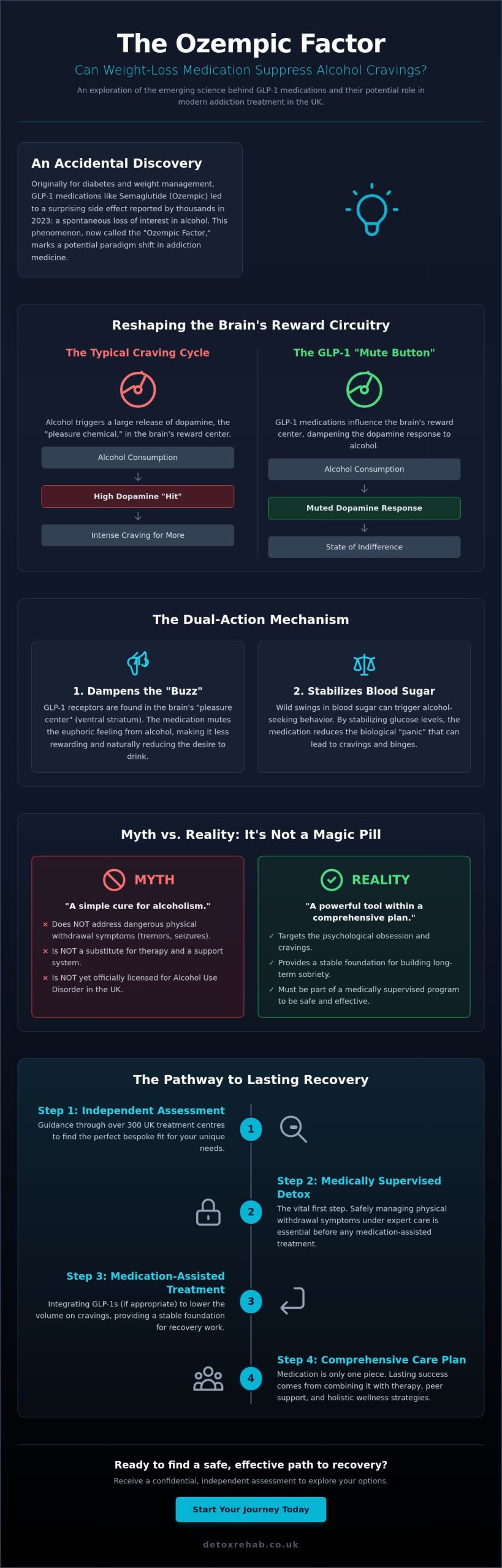
GLP-1 receptors are not just found in your gut; they are also present in the areas of your brain that regulate dopamine. When you take these medications, they influence the ventral striatum, which is the “pleasure centre” of the brain. This interaction means the usual “buzz” or euphoria associated with alcohol is often muted. You might find that drinking feels less rewarding, which naturally reduces the desire to continue. It’s vital to note that these are currently “off-label” uses for Alcohol Use Disorder (AUD). While 2024 research is incredibly promising, these drugs are not yet officially licensed for addiction treatment in the UK.
Why London is Watching These Developments
London has always been a hub for medical innovation and private healthcare excellence. We see a high demand for bespoke, evidence-based solutions in areas like Marylebone and Chelsea, where patients seek the latest advancements in medicalised wellness. Because the “Ozempic hype” is everywhere, it’s our role to provide a calm, steady hand. We ensure that you receive safe, regulated advice rather than following social media trends. Your safety and confidentiality remain our priority as we explore how these modern tools can fit into a comprehensive, compassionate recovery plan.
How GLP-1 Medications May Suppress Alcohol Cravings
Understanding the science behind The Ozempic Factor: Can Weight-Loss Meds Help Suppress Alcohol Cravings? requires looking at the brain’s reward pathways. When you consume alcohol, your brain releases dopamine, creating a loop of pleasure and subsequent desire. GLP-1 agonists disrupt this cycle by dampening the dopamine response in the ventral striatum. This shift moves you from a state of intense craving to a state of indifference. You might find yourself looking at a glass of wine and simply not wanting it. This isn’t just about willpower; it’s a physiological change in how your brain perceives reward.
By Examining Glucagon-Like Peptide-1 Receptor (GLP-1R) Agonists, researchers have identified that these drugs also stabilize blood sugar levels. Fluctuating glucose often triggers alcohol-seeking behaviour because the body craves the quick energy found in ethanol. By smoothing out these peaks and valleys, the medication reduces the biological panic that leads to a binge.
It’s essential to distinguish between the mental urge and physical dependency. These medications don’t address the dangerous physical symptoms of withdrawal, such as tremors or seizures. Instead, they target the psychological obsession. If you’re ready to explore how these tools fit into a wider plan, we can help you find bespoke recovery pathways that suit your specific needs. Clinical data projected for 2025 and 2026 suggests that patients using these medications may see a 35% to 40% reduction in heavy drinking days, offering a powerful bridge to long-term sobriety.
Targeting the “Binge” Cycle
Semaglutide appears to interfere with the escalation of drinking. For many, the first drink triggers a loss of control that leads to many more. GLP-1 agonists may prevent this by reducing the “hit” of pleasure derived from ethanol, making it easier to stop. Craving suppression via GLP-1 agonists represents a fundamental rewiring of the brain’s reward anticipation, turning a compulsive drive into a manageable choice. This helps reduce the frequency of heavy drinking episodes that often derail recovery.
Beyond Ozempic: Tirzepatide and Other Variants
While Ozempic is the most famous, other drugs like Mounjaro (tirzepatide) are showing even greater promise. Tirzepatide is a dual agonist, meaning it targets two different receptors instead of one. Recent addiction research suggests this dual approach might be more potent for suppressing cravings than semaglutide alone. However, a one size fits all approach doesn’t work for London patients. Factors like your medical history, the severity of your alcohol use, and your unique metabolism mean that a tailored prescription is vital for safety and success.
Myth vs. Reality: Is it a Magic Pill for Sobriety?
While the headlines suggest we’ve found a “miracle” for addiction, we must approach these claims with clinical caution and compassion. It’s vital to understand that no medication acts as a standalone cure for alcoholism. The Ozempic Factor: Can Weight-Loss Meds Help Suppress Alcohol Cravings? The evidence suggests they can reduce the chemical “noise” in your brain, but they don’t erase the history or the habits that sustain a person’s relationship with alcohol. We often see the “Ozempic rebound” in weight management, where symptoms return once the medication stops. The same risk applies to sobriety. Without a foundation of recovery, the silence provided by the drug may only be temporary.
You cannot medicate away the “why” behind your drinking. Whether it’s past trauma, chronic stress, or social anxiety, these underlying drivers remain when the prescription runs out. In London, we’ve seen a worrying rise in people purchasing unregulated semaglutide from illicit online pharmacies to self-treat addiction. The Medicines and Healthcare products Regulatory Agency (MHRA) seized 369 counterfeit Ozempic pens in 2023 alone. Using these unregulated products without a clinical detox plan is dangerous. True healing requires a bespoke approach that combines medical safety with emotional support.
The Biological vs. The Behavioral
Suppressing a physiological urge is different from building a life you don’t want to escape. Medication might quiet the brain’s reward centre, but it doesn’t teach you how to handle a difficult day at work or a strained relationship. This is why we integrate London-based therapies like Cognitive Behavioural Therapy (CBT) and Dialectical Behaviour Therapy (DBT) into our care plans. Consider the experience of a recent patient who used weight-loss meds to stop drinking for three months. When a major family crisis occurred, they relapsed because they hadn’t developed the emotional resilience to cope with high-intensity stress. The Ozempic Factor: Can Weight-Loss Meds Help Suppress Alcohol Cravings? Yes, but only as one part of a wider, therapeutic journey.
Potential Side Effects and Risks
We must also consider the physical toll. Common side effects like severe nausea and vomiting can mimic or even mask the symptoms of alcohol withdrawal, which is potentially life-threatening if not monitored. Some patients also report “anhedonia,” a state where you lose the ability to feel pleasure from anything, including food, hobbies, or intimacy. This emotional flattening can make early recovery feel bleak and unrewarding. Seeking medical supervision in a qualified London clinic is non-negotiable. We ensure your safety by monitoring these side effects and adjusting your tailored treatment plan in real-time, providing the steady guidance you need to reclaim your life safely.
Integrating Medication into London Alcohol Rehab Plans
London’s private addiction sector is currently at the forefront of a significant medical shift. We’re seeing an increase in clinics exploring Medication-Assisted Treatment (MAT) as a way to bolster traditional recovery frameworks. While the conversation around The Ozempic Factor: Can Weight-Loss Meds Help Suppress Alcohol Cravings? is gaining momentum, we treat it as one piece of a much larger, person-centred puzzle. For the high-performing professional balancing a demanding career in the City or Canary Wharf with a private struggle, these advancements offer a new layer of hope. Our team focuses on integrating these tools into a structured, residential environment where your safety is the absolute priority.
A residential stay provides the “safety net” required when trialling new pharmacological approaches. It isn’t just about the medication itself; it’s about the clinical expertise that surrounds it. We ensure that any trial of new medication happens within a controlled, supportive setting. This allows us to monitor your progress in real-time and adjust your care plan as your body begins to heal. This level of bespoke attention is what sets private London care apart, providing a stable foundation for a life free from dependency.
The London Private Treatment Advantage
Choosing a private facility in the capital gives you direct access to world-class addiction psychiatrists, many of whom operate within the prestigious Harley Street medical district. These experts provide a level of oversight that goes beyond a simple prescription. They craft bespoke nutrition and wellness plans that work in harmony with GLP-1 therapy to restore your physical vitality. During the initial 14 to 28 days of treatment, a 24/7 clinical environment is essential. It allows us to monitor how your body responds to new treatments while ensuring you feel supported, comfortable, and safe every hour of the day.
Traditional Detox vs. Med-Enhanced Recovery
It’s vital to understand that medication like semaglutide isn’t a replacement for a medically supervised detox. If you’ve been drinking heavily, your body needs a clinical intervention to safely manage acute withdrawal symptoms. Our clinical team views medications like Ozempic as potential “aftercare” or maintenance tools rather than detox agents. They help quiet the “noise” of addiction once the physical toxins are gone. To understand the first phase of this journey, you can read our guide on How to Find Alcohol Detox Clinics in London. This staged approach ensures you don’t just stop drinking, but you gain the biological stability to stay sober long-term.
We’re ready to guide you through a recovery plan that’s as unique as you are. Reach out to our specialists today to take your first step toward a new beginning.
Finding the Right Path to Recovery in London
Choosing a treatment facility among the 300+ UK registered centres can feel impossible when you’re already struggling with the weight of addiction. We understand that every individual’s journey is unique. This is why Detox Rehab Clinics UK provides a vital bridge between you and the clinical setting that will best support your healing. We don’t just provide a list; we offer a curated path based on your specific medical history and personal circumstances. Our independent assessments ensure that your care is bespoke, focusing on your physical health and your long-term mental wellbeing.
Your London location is more than just a postcode. It’s the foundation of your long-term success. Staying local for treatment allows for seamless family involvement during therapy sessions, which can significantly improve recovery outcomes. It also ensures that your aftercare plan is robust and accessible. Recovery doesn’t end when you leave the clinic; it’s a continuous process that requires a supportive community close to home. We help you find a facility where the transition back to daily life in the capital is managed with expert precision.
Bespoke Referral Services
Our team matches your medical needs with the right London facility. We use a free, independent advice model. This means our loyalty stays with you, the patient, not a specific clinic. When you call our London-based advisors, you’ll receive a comprehensive assessment that looks at your physical health and the severity of your cravings. We consider whether emerging treatments discussed in The Ozempic Factor: Can Weight-Loss Meds Help Suppress Alcohol Cravings? might be a relevant topic for your medical team to explore during your residential stay. Our goal is to find the clinical environment where you feel safest and most supported.
- Access to 24/7 medical supervision and detoxification support.
- Direct links to CQC-regulated clinics across Greater London.
- Tailored aftercare plans to prevent relapse in high-pressure environments.
- Confidential guidance for families and employers.
Your New Beginning Starts Today
A life reclaimed from the cycle of cravings is within your reach. While the research surrounding The Ozempic Factor: Can Weight-Loss Meds Help Suppress Alcohol Cravings? continues to evolve, the need for professional, compassionate intervention remains constant. We’re here to guide you through the fear. Expert help is available 24/7 in London to ensure you never have to face this alone. Taking the first step is often the most difficult part of the process, but it’s the only way to reach a healthier future. You have the strength to change, and we have the expertise to show you how.
Take control of your future today.
Take the Next Step Toward Your Recovery
Your path to sobriety is unique; it requires more than just the latest medical breakthrough. While clinical research suggests that GLP-1 medications may reduce dopamine responses to alcohol, they aren’t a magic pill for everyone. Real healing happens when you combine clinical innovation with a tailored rehabilitation programme. Understanding The Ozempic Factor: Can Weight-Loss Meds Help Suppress Alcohol Cravings? is a vital part of exploring your options, but pharmaceutical support works best when integrated into a bespoke care plan. Long-term recovery in London relies on addressing the psychological roots of addiction alongside any medical intervention.
You don’t have to navigate these complex choices alone. Our team provides independent advice covering more than 300 UK treatment centres, ensuring you find a facility that matches your specific needs. We offer compassionate support from London-based addiction specialists who are available 24/7 for immediate intervention and referral. Reclaiming your life is a bold step, and we’re here to provide the steady guidance you need to reach safety. Get Free, Confidential Advice on London Rehab Options
Every journey toward a new beginning starts with a single, informed decision. We believe in your capacity for change and are ready to help you start your recovery today.
Frequently Asked Questions
Is Ozempic officially approved for alcohol addiction treatment in the UK?
Ozempic isn’t currently licensed for treating alcohol addiction by the Medicines and Healthcare products Regulatory Agency (MHRA). It’s officially approved for Type 2 diabetes management, while its sister drug, Wegovy, is licensed for weight loss. Any use for reducing alcohol consumption is considered off-label. We focus on providing you with treatments that meet the highest regulatory standards for your safety and recovery.
Can I take weight-loss meds while I am still drinking alcohol?
Mixing GLP-1 medications with alcohol isn’t recommended because it increases your risk of severe side effects. Alcohol can heighten the risk of pancreatitis and cause unpredictable drops in blood sugar levels. When you’re trying to heal, your body needs stability. Combining these substances can mask the medication’s effects and put unnecessary strain on your liver and kidneys during the detoxification process.
How much does private alcohol rehab in London cost compared to medication?
Private residential rehab in London typically starts from £5,000 for a 28-day programme, though premium clinics can exceed £15,000. A private prescription for weight-loss medication usually costs between £150 and £300 per month. While medication is cheaper, it doesn’t provide the 24-hour clinical monitoring or the intensive psychological therapy that residential treatment offers. We believe a bespoke approach to your recovery is worth the investment.
What are the risks of using GLP-1 drugs for addiction without medical supervision?
Using these drugs without a doctor’s guidance can lead to dangerous complications like gallbladder disease or severe dehydration from gastrointestinal distress. Clinical data shows that 1 in 10 patients may experience persistent nausea or vomiting. Without professional oversight, you might also miss underlying health issues that require immediate intervention. We’re here to ensure your journey to health is managed by experts who prioritize your physical well-being.
Will Ozempic help with alcohol withdrawal symptoms like tremors or seizures?
No, Ozempic won’t prevent or treat acute alcohol withdrawal symptoms such as tremors, hallucinations, or seizures. Withdrawal is a serious medical condition that requires specific medications like benzodiazepines to keep you safe. Attempting to use weight-loss meds to manage the Ozempic Factor: Can Weight-Loss Meds Help Suppress Alcohol Cravings? during the early stages of detox is dangerous. You need clinical support to navigate the first 72 hours of sobriety safely.
How do I find a London clinic that offers medication-assisted treatment for alcohol?
You should look for London facilities that are fully registered with the Care Quality Commission (CQC). These clinics provide regulated medication-assisted treatment that combines clinical expertise with compassionate care. Our team can help you find a bespoke programme in the city that fits your specific needs. We’ll guide you through every step, ensuring you have access to a steady, professional support system throughout your recovery.
Can I get Ozempic on the NHS for alcohol cravings?
You can’t get Ozempic on the NHS for alcohol cravings because NICE guidelines currently limit its use to Type 2 diabetes and specific weight management criteria. Patients must usually have a BMI of 35 or higher with significant comorbidities to qualify for GLP-1s on the NHS. Understanding the Ozempic Factor: Can Weight-Loss Meds Help Suppress Alcohol Cravings? often requires seeking private specialist advice, as the health service doesn’t yet recognize it as a standard addiction treatment.
Does suppressing cravings with medication lead to long-term sobriety?
Medication is a powerful tool for reducing the urge to drink, but it isn’t a standalone cure for addiction. Long-term sobriety usually requires a holistic approach that includes therapy, support groups, and lifestyle changes. Research from 2023 suggests that while drugs can help manage the physical drive, the emotional and psychological aspects of recovery need dedicated attention. We work with you to build a foundation for a new, empowered life.