

What if the true measure of a first-class detox clinic wasn’t its postcode or its decor, but the unwavering standard of its medical care? We know that when you’re looking for help, the sheer number of options in London can feel overwhelming. You’re right to question what lies beneath the surface, wondering if ‘luxury’ translates to genuine clinical safety or just expensive amenities. The fear of withdrawal is real, and placing your trust in the right hands is the most important decision you’ll make.
The journey through detoxification is the start, not the end. It is the critical first phase in reclaiming your health, your relationships, and your future. The stability and safety provided by a medically supervised detox create the foundation upon which a new life can be built—a life that often includes setting new wellness goals. For those looking to manage their weight as part of this holistic recovery, you can learn more about Slinic. You have already found the strength to look for help. Let us provide the expert guidance to ensure you find the right care. Your new beginning is waiting. Call us today.
This guide was created to give you clarity and confidence. Here, we will demystify the process of a Private Alcohol Detox in London: What to Expect from CQC-Regulated Care. We promise to show you how the Care Quality Commission’s strict, government-backed standards are your ultimate assurance of safety, clinical excellence, and a real foundation for healing. You’ll discover what a medically-supervised detox truly involves, how to interpret CQC ratings, and how to choose a path toward reclaiming your life with a team you can absolutely trust.
Key Takeaways
- Learn why CQC regulation is the non-negotiable standard for your safety, ensuring every clinic is rigorously inspected against five fundamental principles of care.
- Gain a clear understanding of the clinical journey during the first 72 hours, including the crucial role of a consultant psychiatrist in creating your bespoke medical detox plan.
- Our guide to Private Alcohol Detox in London: What to Expect from CQC-Regulated Care provides a framework to distinguish genuine clinical excellence from luxury hospitality.
- Find out how to confidently compare London clinics by focusing on CQC ratings and staff-to-patient ratios, not just location or room size.
Why CQC Regulation is the Gold Standard for Alcohol Detox in London
Making the decision to seek help for alcohol dependence is a profound first step towards reclaiming your life. The next, equally critical step, is choosing where to place your trust. In London’s complex healthcare market, one standard stands above all others for ensuring your safety and the quality of your care: registration with the Care Quality Commission (CQC).
The CQC is the independent regulator of all health and adult social care services in England. Its role is to ensure that hospitals, clinics, and care homes provide people with safe, effective, compassionate, and high-quality care. When considering your options for Private Alcohol Detox in London: What to Expect from CQC-Regulated Care is the most important question you can ask. This is because alcohol detoxification is not simply about stopping drinking; it is a complex medical procedure that carries significant risks if not managed correctly.
The physical and psychological challenges of the clinical alcohol detoxification process, which can include severe withdrawal symptoms like seizures and delirium tremens, demand 24/7 medical supervision. For this reason, it is classified by law as a ‘regulated activity’. This legally distinguishes a CQC-registered medical clinic from a ‘sober living house’ or ‘recovery retreat’. While the latter may offer valuable peer support, they are not licensed or equipped to manage the medical complexities of a safe detox. CQC regulation is your guarantee that a facility has the qualified staff, approved procedures, and emergency protocols required to protect you.
The Legal Requirement for CQC Registration
It is illegal for any provider in London to offer medical alcohol detoxification without being registered with the CQC. This legal framework, established under the Health and Social Care Act 2008, is designed to protect vulnerable people. You can and should verify any clinic’s status on the official CQC website before committing to treatment. Every registered service must also have a ‘Registered Manager’, a named individual who is legally accountable for ensuring the care provided meets CQC’s fundamental standards of safety and quality.
Understanding London’s Private Healthcare Landscape
London is home to a world-renowned concentration of medical expertise, with areas like Harley Street setting global benchmarks for clinical excellence. CQC-regulated clinics in the capital are often at the forefront of addiction treatment, integrating the latest evidence-based therapies. However, it’s vital to understand that the word ‘private’ does not automatically mean ‘regulated’. Many facilities operate under appealing descriptions like ‘luxury retreat’, but without CQC registration, they cannot provide the medical care essential for a safe detox. Always check the fine print; your health depends on it.
The 5 Fundamental Standards: How London Clinics are Inspected and Rated
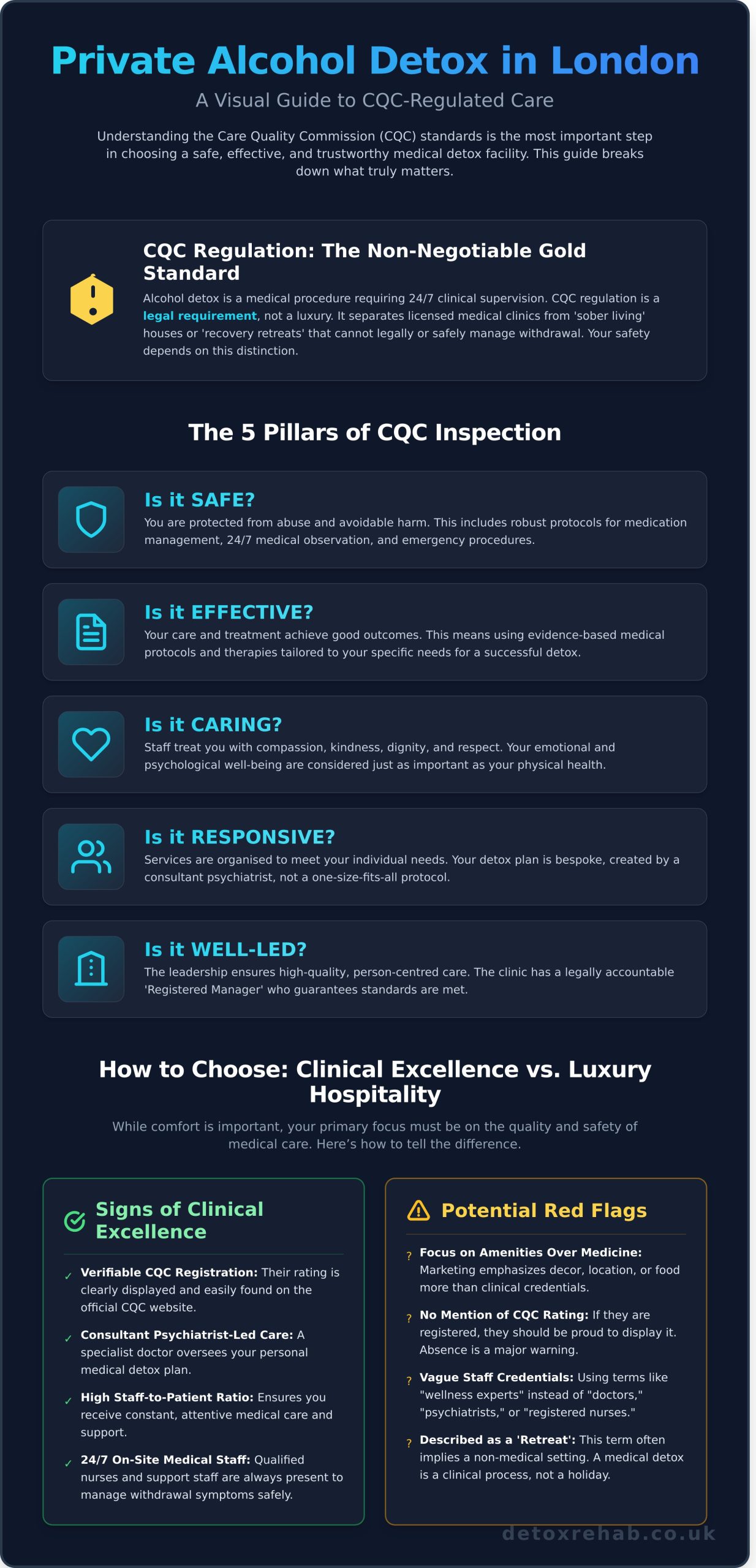
When you place your trust in a private alcohol detox clinic, you need absolute certainty that you’re in safe, expert hands. In England, this certainty is provided by the Care Quality Commission (CQC), the independent regulator of all health and social care services. The CQC’s role is to ensure facilities provide care that is safe, effective, compassionate, and high-quality. They don’t just look at paperwork; they conduct rigorous on-site inspections and speak directly with staff and patients.
Their entire inspection framework is built around five simple but powerful questions. Understanding these questions is key to deciphering a clinic’s CQC report and knowing what to expect from CQC-regulated care during your private alcohol detox in London.
- Is it safe? Are you protected from abuse and avoidable harm?
- Is it effective? Does your care, treatment, and support achieve good outcomes and help you maintain a good quality of life?
- Is it caring? Do the staff involve you and treat you with compassion, kindness, dignity, and respect?
- Is it responsive? Are services organised to meet your specific needs?
- Is it well-led? Does the leadership of the clinic ensure high-quality care that’s based on your individual needs, and does it encourage learning and innovation?
These aren’t just abstract concepts. They directly shape every moment of your experience, from your initial assessment to the day you complete your detoxification and begin the next phase of your healing.
Safety and Medication Management
For alcohol withdrawal, safety is the paramount concern. A CQC ‘Safe’ rating means the clinic has rigid, evidence-based protocols for managing your detox. This includes the precise, tapered administration of medications like Librium (Chlordiazepoxide) to prevent dangerous withdrawal symptoms such as seizures. It also mandates the presence of 24/7 nursing care, especially for those with high dependency or co-occurring health conditions like liver damage, diabetes, or epilepsy, ensuring immediate medical intervention is always available.
Clinical Effectiveness and Evidence-Based Care
An ‘Effective’ rating confirms the clinic’s treatment isn’t based on guesswork but on proven clinical science. Inspectors verify that care plans adhere to guidelines from the National Institute for Health and Care Excellence (NICE). This is your assurance that the treatment you receive is aligned with the highest national standards. We believe that effective care is the alignment of medical intervention with proven recovery outcomes. This means your journey won’t be a generic, ‘one-size-fits-all’ program. Instead, it will be a bespoke treatment plan, designed around your unique medical history, psychological needs, and personal circumstances, reflecting the best practices outlined in guidance on NHS alcohol treatment options and by leading clinical bodies.
The CQC’s focus on safety was reinforced in its July 2022 briefing on residential detoxification, which highlighted risks in services with inadequate staffing or poor risk assessment. This makes choosing a highly-rated clinic more critical than ever. A ‘Good’ or ‘Outstanding’ CQC rating is non-negotiable. It is your primary guarantee that a clinic has the medical expertise, robust safety protocols, and compassionate culture necessary to manage the complexities of alcohol withdrawal safely. When your health is on the line, this independent verification provides the peace of mind you deserve. If you’re looking at clinic reports and feel unsure how to interpret the findings, our admissions team can help you understand what matters most.
The Clinical Journey: What Happens During a Private Detox in a London Facility
Stepping into a private detox facility can feel overwhelming. We understand. The first 72 hours are often the most physically and emotionally challenging, which is why our clinical process is designed with one purpose: to provide you with immediate safety, comfort, and expert medical care. This journey is a structured, compassionate, and highly personalised path away from physical dependency. It’s the first crucial step in reclaiming your life.
Your experience of a Private Alcohol Detox in London: What to Expect from CQC-Regulated Care begins the moment you arrive. Our focus is on stabilising you physically and ensuring you feel secure. Let’s walk through what these initial days look like, step by step.
The Admission and Assessment Phase
Within the first few hours of your arrival, our clinical team will conduct a thorough and confidential assessment. This isn’t just a formality; it’s a foundational step that aligns with the rigorous CQC inspection standards for detox clinics, ensuring your care is safe and effective from the very beginning. This phase includes:
- Comprehensive Medical Checks: A nurse will take your vital signs, and we will conduct blood tests to assess your liver function, vitamin levels, and overall physical health. This gives us a precise baseline to work from.
- Consultant Psychiatrist Assessment: You will meet with a London-based consultant psychiatrist who specialises in addiction. Their role is to understand your history with alcohol, screen for any co-occurring mental health conditions (dual diagnosis) like anxiety or depression, and listen to your personal concerns.
- Your Personalised Detox Prescription: Based on these assessments, we create your bespoke detox plan. This details the specific medication, dosage schedule, and nutritional support you’ll receive to manage withdrawal symptoms safely.
Medically Managed Withdrawal
The peak withdrawal phase, typically occurring between 24 and 72 hours, is managed with constant, 24-hour medical supervision. You are never alone. Our nursing team is on hand around the clock to monitor your progress and provide immediate support. This is where the clinical expertise of a CQC-regulated facility truly shows its value.
We use a combination of evidence-based treatments to keep you comfortable:
- Tapered Medication: We typically use medications like Chlordiazepoxide (Librium) to prevent severe withdrawal symptoms, such as seizures. The dosage is carefully calculated and gradually tapered down as your body stabilises and symptoms subside.
- Vital Nutritional Therapy: Chronic alcohol use severely depletes the body of essential vitamins, particularly Thiamine (B1). We administer high-strength vitamin therapy, often via an injection known as Pabrinex, to rapidly restore these levels and prevent the risk of Wernicke-Korsakoff syndrome, a serious form of alcohol-related brain damage.
- Holistic Comfort Measures: Alongside medical intervention, our London clinics often incorporate holistic therapies. Techniques such as mindfulness, auricular acupuncture, and specialised nutrition help to calm the nervous system, reduce anxiety, and improve sleep without adding unnecessary medication.
Once your physical symptoms have stabilised and the most acute phase of withdrawal is over, the focus gently begins to shift. Your body is starting to heal. Now, we can begin the equally important work of supporting your psychological well-being, laying the foundation for a lasting recovery.
Navigating the London Market: Distinguishing Between Luxury Hospitality and Clinical Excellence
London’s private detox market is unique. It offers a spectrum of choice, from discreet townhouses in Kensington to serene estates in Richmond. However, a high price tag and a prestigious postcode are not guarantees of clinical safety. Many facilities market themselves on luxury amenities, like five-star chefs and Egyptian cotton sheets, which can distract from the one thing that truly matters: the quality of medical care.
It’s a matter of prioritizing substance over style. Whether you’re buying a simple but well-crafted item like a handmade tweed dog collar UK or investing in vehicle security with experts like Safe & Sound Mobile, the focus should be on foundational quality. This principle is magnified a thousand times when your health is at stake; true peace of mind comes from the robust, reliable protection of CQC-regulated medical care, not from superficial luxuries.
Your safety during detoxification is paramount. It’s a serious medical process that requires expert supervision. To make an informed choice, you need a clear framework for comparison that prioritises clinical excellence over cosmetic luxury. When you’re researching Private Alcohol Detox in London: What to Expect from CQC-Regulated Care, use these three pillars to assess any potential clinic:
- 1. CQC Rating: This is your non-negotiable starting point. The Care Quality Commission (CQC) is the independent regulator of all health and social care in England. A rating of ‘Good’ or ‘Outstanding’ from a recent inspection (within the last 18 months) signifies that a clinic meets rigorous standards for safety, effectiveness, and leadership. Anything less, or an inability to produce a report, is a major concern.
- 2. Staff-to-Patient Ratio: Ask for specific numbers. A low staff-to-patient ratio, such as 1:3 or 1:4, ensures you receive constant, personalised attention. A higher ratio, like 1:8 or more, means clinical staff are stretched thin, potentially delaying responses in a critical situation.
- 3. Location and Environment: Consider what you need to feel safe and focused. A central London clinic offers unparalleled convenience for family visits and access to specialist consultants. A facility in Greater London might provide more space, tranquility, and privacy, which can be more conducive to healing for some. This is a personal choice, but it should be made after confirming the clinic’s medical credentials.
A glossy brochure can be misleading. Look past the photos of sun-drenched rooms and read between the lines. Vague terms like “holistic support” should be questioned. Ask them: “What does that involve? Does it include therapy with a BACP-registered psychotherapist or simply a yoga session?” True quality lies in the credentials of the team and the structure of the medical programme, not the thread count of the bedding.
Red Flags to Watch Out For
Your wellbeing is the only priority. Be wary of any clinic that cannot provide immediate, clear answers to fundamental safety questions. These are critical warning signs:
- No CQC Report: A clinic proud of its standards will have its latest CQC inspection report readily available. If they hesitate or cannot provide it instantly, consider it a serious red flag.
- Admission Without a Doctor: A safe detox admission always includes a thorough medical and psychiatric assessment by a GMC-registered doctor before you begin. Bypassing this step is clinically negligent.
- Vague Staffing Answers: Ask directly: “Is there a registered nurse on-site and awake 24 hours a day?” Anything less than a clear “yes” is an unacceptable risk to your health.
The Value of London-Specific Expertise
Choosing a London-based clinic offers distinct clinical advantages. You gain access to a world-class ecosystem of medical specialists, from consultant psychiatrists to cardiologists, who can be brought in to manage complex withdrawal symptoms or co-occurring health conditions. Furthermore, a London location makes it easier for your family to participate in your recovery through visits and therapy sessions. This local connection is vital for building a sustainable support network, which is a cornerstone of long-term recovery. Integrating your treatment with London-based aftercare services smooths the transition back to daily life. Choosing a Private Alcohol Rehab in London that supports this continuity of care is one of the most important decisions you’ll make.
If you’re finding it difficult to assess a clinic’s credentials or feel overwhelmed by the options, we can help you cut through the noise. Speak with one of our confidential care coordinators today to verify a clinic’s CQC status and clinical standards.
Finding Safety in Recovery: How We Connect You to London’s Best CQC-Regulated Care
Making the decision to seek help is the most courageous step you can take. But the path forward can seem confusing, especially in a city as vast as London. With hundreds of treatment options available, how can you be certain you are choosing a facility that is not only safe and effective but also right for your unique situation? This is where we come in. We are not a treatment centre. We are your independent, expert advisors, dedicated to helping you navigate the complexities of addiction recovery with clarity and confidence.
Our process is built on a foundation of rigorous, impartial assessment. We continuously vet more than 300 addiction treatment centres across the UK, but our focus for you is on the capital. We analyse their Care Quality Commission (CQC) inspection reports, clinical methodologies, staff qualifications, and patient outcomes. Of the centres rated by the CQC, only a small fraction, approximately 5%, achieve an ‘Outstanding’ rating. Our mission is to identify these premier facilities in London and understand their specific strengths, ensuring we connect you only with the absolute best in clinical care.
Before you make any commitment, we provide a free and completely confidential assessment. This is a crucial conversation, not a sales pitch. It allows our trained addiction specialists to understand your specific medical history, the severity of your alcohol dependency, any co-occurring mental health conditions, and your personal circumstances. This detailed understanding is fundamental to a successful placement and is a key part of what to expect from CQC-regulated care in a private alcohol detox in London. It ensures the clinic we recommend is perfectly equipped to manage your detoxification safely and support your long-term goals.
Bespoke Referrals for London Residents
Your recovery journey is personal, and your treatment plan must be too. We match your clinical needs, personal preferences, and budget to a CQC-rated London facility that aligns with you. We operate with total transparency, only recommending clinics we have personally vetted and would trust for our own families. Once a decision is made, we handle the logistics, often securing a fast-track admission for you within 24 hours, getting you into a safe environment without delay.
Your Next Step Toward Healing
In recovery, there is often a powerful but fleeting moment of clarity, a ‘window of willingness’ where the motivation to change is at its peak. It’s vital to act during this time. A single, confidential phone call to our team can simplify the entire process, saving you from the overwhelming task of researching and contacting dozens of London clinics. Professional guidance is the bridge between the chaos of addiction and the safety of CQC-regulated care.
Take the First Step Towards CQC-Approved Healing in London
Choosing the right path to recovery is a significant decision. The most crucial takeaway is that CQC regulation is your non-negotiable guarantee of safety and clinical excellence. It ensures the facility you choose adheres to the 5 fundamental standards of care, providing a true medical detoxification, not just a luxury stay. Understanding what is involved in a Private Alcohol Detox in London: What to Expect from CQC-Regulated Care is the first, powerful step toward making an informed choice for your health.
You don’t have to take that step alone. We are here to guide you with clarity and compassion. Our team provides independent, expert advice on over 300 UK centres, focusing exclusively on facilities rated ‘Good’ or ‘Outstanding’ by the CQC. We offer immediate, 24/7 support and confidential assessments to help you find the right fit for your unique needs.
When you’re ready, we’re here to listen. Speak with a London Detox Specialist Today for Free, Confidential Advice. A new beginning is not just possible; it’s waiting for you.
Frequently Asked Questions About Private Alcohol Detox
Is private alcohol detox in London safe for everyone?
Yes, professionally supervised detox in a CQC-regulated clinic is the safest way to withdraw from alcohol, especially for those with a significant physical dependence. Before you’re admitted, our clinical team conducts a thorough pre-admission assessment to understand your unique medical history. This ensures we can manage any co-occurring health conditions and provide a completely bespoke, safe, and comfortable detoxification process from the moment you arrive.
How much does a CQC-regulated private detox cost in London?
The cost for a CQC-regulated private alcohol detox in London typically ranges from £3,000 to £6,000. This fee generally covers a 7 to 14-day stay, which includes your private accommodation, all prescribed detoxification medications, 24/7 medical and therapeutic support, and all meals. We provide a clear, all-inclusive cost upfront so you can focus entirely on your recovery without worrying about hidden fees.
Can I keep my job while undergoing alcohol detox in London?
Absolutely. Your treatment is completely confidential, and we have a legal duty to protect your privacy. You can take time off work as medical leave; we can provide a doctor’s sick note that doesn’t specify the nature of your treatment. Under the UK’s Equality Act 2010, alcohol dependence can be considered a disability, which gives you legal protections against unfair dismissal. Your career can and should be protected while you heal.
What is the difference between a ‘Good’ and ‘Outstanding’ CQC rating for rehab?
A ‘Good’ CQC rating means a clinic meets all required standards for being safe, effective, and well-led. An ‘Outstanding’ rating, awarded to fewer than 5% of adult social care services in England, signifies that a clinic exceeds these standards. These clinics often demonstrate exceptional, innovative approaches to care, achieve superior patient outcomes, and foster a deeply compassionate and empowering culture for both clients and staff.
What happens if I try to detox from alcohol at home in London?
Attempting to detox from alcohol at home without medical supervision is extremely dangerous and can be fatal. Abruptly stopping drinking can lead to severe withdrawal symptoms, including seizures, hallucinations, and Delirium Tremens (DTs). Without immediate medical intervention, DTs have a mortality rate as high as 15%. A professional detox provides the medical care needed to manage these risks safely and make the process as comfortable as possible.
How long does a typical private alcohol detox in London take?
A typical medically-managed alcohol detox lasts between 7 and 14 days. The exact duration of your stay is tailored to your individual needs. Factors like your physical health, the length and severity of alcohol dependence, and any co-occurring mental health conditions will influence your personal treatment timeline. Our goal is to ensure you are stable, comfortable, and ready for the next step in your recovery journey.
Will my private health insurance cover CQC-regulated detox in London?
Yes, most major UK private health insurance policies, including those from Bupa, AXA, Aviva, and Cigna, provide cover for residential detox and rehabilitation. Coverage can vary, so it’s best to check your specific policy. Our admissions team can assist you with this; we can contact your provider on your behalf to confirm your level of cover and handle the administrative details, allowing you to focus on your recovery.
What should I pack for a stay in a London detox clinic?
You should pack comfortable, casual clothing for about 7-10 days, including sleepwear and something for light exercise like walking. Bring your own toiletries, but please ensure they are alcohol-free (check mouthwash and perfumes). We also recommend bringing a good book, a journal, and contact details for loved ones. Please don’t bring valuables, non-prescribed medications, or any electronic devices with cameras to protect the privacy of all our clients.