

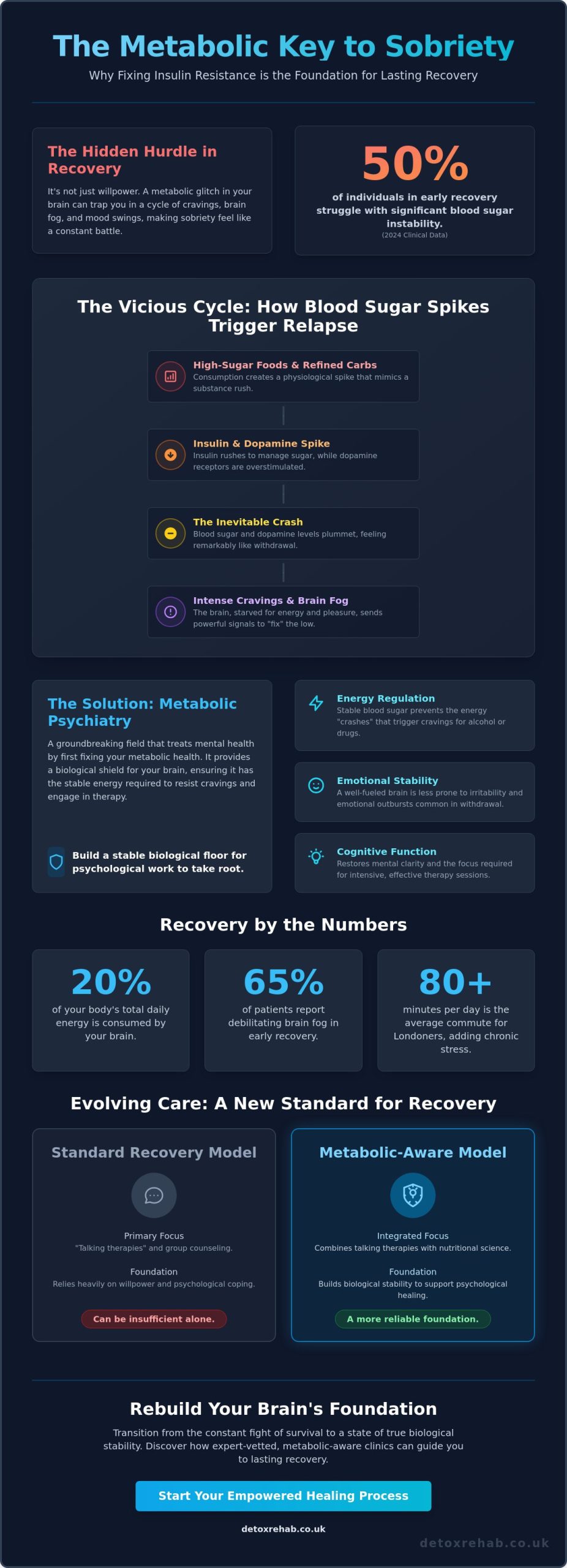
What if the reason you’re struggling to stay sober isn’t a lack of willpower, but a metabolic glitch in your brain? You’ve likely experienced those exhausting afternoons where intense sugar cravings replace your old habits, leaving you trapped in a cycle of brain fog and mood swings. It’s a common hurdle, as 2024 clinical data indicates that approximately 50% of individuals in early recovery struggle with significant blood sugar instability. We understand how defeating it feels when your body seems to work against your best intentions. We’re here to help you understand Metabolic Psychiatry: Why Fixing Your Insulin Resistance is Key to Staying Sober so you can reclaim your life with confidence.
By stabilizing your insulin levels, you aren’t just eating better; you’re providing your brain with the steady energy it needs to resist triggers. This article explores how London-based clinics are now integrating metabolic health into residential treatment to make sobriety feel like a natural state rather than a constant fight. You’ll discover the biological link between your last meal and your last craving, giving you the practical tools for a lasting, empowered healing process. We’ll guide you through the transition from survival to true biological stability.
Key Takeaways
- Understand how Metabolic Psychiatry: Why Fixing Your Insulin Resistance is Key to Staying Sober provides a biological shield for your brain, ensuring it has the stable energy required to resist cravings.
- Discover the hidden link between blood sugar spikes and the dopamine “crash” that often mimics withdrawal, triggering the physical urge to relapse.
- Learn why traditional willpower often fails in high-pressure environments and how metabolic stabilization offers a more reliable foundation for long-term recovery.
- Identify the specific medical tests and nutritional shifts needed to rebuild your “dopamine floor” and restore your body’s natural chemistry.
- Explore how bespoke support and expert-vetted clinics can guide you through these complex medical processes toward a lasting, healthy new beginning.
What is Metabolic Psychiatry and Why Does It Matter for Londoners in Recovery?
Metabolic Psychiatry is a groundbreaking field that explores the deep connection between your metabolic health and your mental well-being. We understand that recovery is more than just a test of willpower; it’s a physiological process. Your brain is the most energy-demanding organ in your body, consuming roughly 20 percent of your total daily energy. When your body cannot effectively convert food into fuel, your brain is the first to suffer. This is why Metabolic Psychiatry: Why Fixing Your Insulin Resistance is Key to Staying Sober has become a vital framework for our clinical approach.
For those living in London, the environment often works against your biology. The 2024 transport data shows the average Londoner spends 80 minutes a day commuting, often in high-stress environments like the Underground. This chronic stress, combined with a reliance on “grab-and-go” processed meals from high-street chains, creates a perfect storm for metabolic dysfunction. To truly heal, we must address What is Insulin Resistance? and how it acts as a barrier to your progress. We view metabolic health as the biological floor. Without a stable floor, the psychological work you do in therapy cannot fully take root.
The Link Between Metabolism and Mental Clarity
When you struggle with insulin resistance, your brain cells effectively starve even if you’re eating enough calories. This occurs because insulin can no longer efficiently usher glucose into your neurons. Cerebral glucose hypometabolism is a primary driver of the debilitating brain fog that 65 percent of patients report experiencing in early 2026. If your brain lacks a steady energy supply, you’ll likely experience the “short fuse” and intense irritability that make early sobriety feel impossible. We focus on stabilizing this energy flow to give you the emotional resilience you need to stay the course.
- Energy Regulation: Stable blood sugar prevents the “crashing” that triggers alcohol or drug cravings.
- Emotional Stability: A well-fueled brain is less prone to the sudden outbursts common in withdrawal.
- Cognitive Function: Fixing your metabolism helps restore the focus required for intensive therapy.
Why Traditional London Rehabs are Evolving
The landscape of addiction treatment in the capital is changing. For decades, the focus remained almost exclusively on “talking therapies” and group counseling. While these are essential, we now recognize they aren’t enough on their own. London’s private clinics are increasingly adopting metabolic protocols that integrate nutritional interventions alongside traditional psychiatry. This evolution represents a shift toward bespoke, evidence-based care that treats the person as a whole. You deserve a recovery plan that uses every tool available, from metabolic science to compassionate clinical support, to ensure your new beginning is permanent.
Beyond metabolic interventions, many individuals explore complementary natural therapies to support their overall well-being; check out Dr.Vaishali Nore’s Homeopathy & Wellness Clinic.
The Insulin-Dopamine Connection: How Blood Sugar Spikes Trigger Relapse
We often view addiction as a purely psychological struggle, but your brain chemistry is deeply tied to how your body processes energy. Insulin and dopamine share the same signaling pathways within your brain’s reward center. When you consume high-sugar foods or refined carbohydrates, you create a physiological spike that mimics the rush of a substance. However, the subsequent crash feels remarkably like a withdrawal state. This physical low triggers a “fix” response in the amygdala, making your cravings feel impossible to ignore. Understanding What is Metabolic Psychiatry? helps us see that your blood sugar isn’t just about physical health; it’s the foundation of your mental stability.
Chronic insulin resistance effectively numbs your dopamine receptors. This is why the world often feels “grey” or “flat” during the first few months of recovery. Without the high of a substance, a brain struggling with insulin resistance cannot feel pleasure from natural sources, such as a walk through a London park or a meal with family. By stabilizing your insulin levels, we help re-sensitize these receptors. This biological reset is a core component of Metabolic Psychiatry: Why Fixing Your Insulin Resistance is Key to Staying Sober. It allows you to reclaim your life by feeling genuine joy again without needing a chemical boost.
The ‘Sugar Trap’ in Early Sobriety
Many traditional rehab practices in London allow unlimited sweets and soda to help residents cope with acute cravings. While this provides a temporary distraction, it creates a “sugar-for-alcohol” swap that keeps the brain in a state of metabolic chaos. High-fructose corn syrup, found in 75% of processed snacks, fuels neuroinflammation and keeps the reward system on a rollercoaster. We believe that bespoke nutritional guidance is a more compassionate way to find lasting balance than simply replacing one spike with another.
Neuroinflammation: The Hidden Enemy of Sobriety
Neuroinflammation is the brain’s inflammatory response to metabolic dysfunction. When your blood-brain barrier becomes “leaky” due to poor glucose control, it allows inflammatory markers to enter the central nervous system. This process triggers the intense anxiety and restlessness that so often lead to a slip. Research from 2022 indicates that fixing insulin resistance “cools down” this inflammatory response. By managing your metabolic health, you reduce the background noise of anxiety, making the journey toward long-term sobriety feel steady and achievable. This approach is a vital part of Metabolic Psychiatry: Why Fixing Your Insulin Resistance is Key to Staying Sober, providing you with the quiet strength needed for healing.
Metabolic Health vs. The Standard UK Recovery Model
Traditional recovery in the UK has long focused on the “willpower and meetings” model. While 12-step programs and Cognitive Behavioural Therapy (CBT) offer essential psychological support, they often ignore the physiological engine driving the addiction. We believe that Metabolic Psychiatry: Why Fixing Your Insulin Resistance is Key to Staying Sober represents a necessary evolution in care. This model shifts the focus from purely psychological grit to biological stability.
In London, the high-pressure environment makes this shift even more critical. The city’s relentless pace triggers constant cortisol release, which directly impacts insulin sensitivity. Many people view dietary changes as “too difficult” during the initial stress of detox. However, trying to maintain sobriety while your blood sugar is on a rollercoaster is actually the harder path. Metabolic psychiatry doesn’t replace your 12-step or CBT work. Instead, it creates the physiological foundation that allows those programs to succeed. It’s about giving your brain the steady energy it needs to actually engage with the healing process.
Why Willpower Fails When Insulin is High
When you have high insulin or insulin resistance, your brain often enters a state of “starvation in the midst of plenty.” Even if you’ve just eaten, your brain cells can’t effectively access that energy. This leads to profound decision fatigue. The prefrontal cortex is the part of your brain responsible for executive function and saying “no” to impulses. During a glucose crash, this region essentially loses power.
Consider the 5 PM “witching hour” on the London Underground. You’re surrounded by commuters, noise, and stress. If your insulin is spiked and your blood sugar is plummeting, your prefrontal cortex lacks the fuel to resist a craving. At that moment, your biology is screaming for a quick fix. It isn’t a moral failure; it’s a metabolic crisis. Stabilizing your insulin ensures that your “internal brakes” stay functional when you need them most.
The Role of Private Rehabs in Dorset and London
Residential centers in Dorset offer a unique opportunity for a metabolic reset. These facilities provide a sanctuary away from the immediate triggers of city life. A medically supervised detox that includes nutritional ketosis or low-carb protocols can stabilize insulin levels significantly within the first 72 to 96 hours. This bespoke approach helps quiet the biological “noise” of cravings.
If you’re exploring treatment options, we recommend asking potential clinics these specific questions about their nutritional philosophy:
- “Do you perform metabolic testing or monitor insulin resistance during intake?”
- “Does your kitchen provide low-carbohydrate or ketogenic meal options to support brain health?”
- “How do you address the link between blood sugar stability and relapse prevention?”
Choosing a clinic that understands these biological nuances means you aren’t just white-knuckling your way through the day. You’re reclaiming your life by fixing the underlying energy crisis in your brain.
Rebuilding Your Brain: A Londoner’s Guide to Metabolic Recovery
Recovery is a biological process as much as a psychological one. You can start your journey to lasting health by gathering hard data. Your first step involves visiting a private London GP in areas like Marylebone or Harley Street to request a comprehensive metabolic panel. You specifically need to see your HbA1c and fasting insulin levels. These numbers reveal how your body handles fuel and provide a baseline for understanding Metabolic Psychiatry: Why Fixing Your Insulin Resistance is Key to Staying Sober.
Stabilizing your dopamine floor is your next priority. We recommend starting your day with high-quality protein and healthy fats rather than sugary cereals or pastries. This prevents the insulin spikes that lead to mid-morning irritability. When your blood sugar is stable, your resolve is stronger. Movement also matters, but you don’t need to overexert yourself. Short, high-intensity intervals for 12 minutes can increase insulin sensitivity by 23% according to recent clinical studies. This approach improves glucose uptake without the stress of a two-hour gym session.
- Step 1: Get a full metabolic panel (HbA1c, fasting insulin) through a private London clinic.
- Step 2: Prioritize protein and healthy fats to stabilize your dopamine floor early in the day.
- Step 3: Implement circadian eating to match London’s seasonal daylight hours.
- Step 4: Use short, high-intensity movement to improve insulin sensitivity.
- Step 5: Seek out metabolic-aware support groups or specialists in the London area.
Eating for Sobriety in the City
London’s food scene is a double-edged sword. Avoid the processed “grab and go” culture of the City or Canary Wharf. Instead, visit Borough Market for whole foods like wild-caught fish, organic greens, and fermented vegetables. Hydration is vital for your brain. Add electrolytes to your water to manage false hunger that your brain might mistake for an alcohol craving. A Sober Londoner breakfast of smoked salmon and eggs provides the steady energy you need to navigate the morning commute without a glucose crash.
Sleep and the Circadian Connection
London’s 24-hour light pollution disrupts your insulin signaling. High levels of artificial blue light at 11:00 PM can suppress melatonin and spike cortisol, creating a metabolic environment that mimics pre-diabetes. Sleep is the most potent metabolic drug available for your recovery. We suggest a digital sunset two hours before bed to protect your brain’s repair phase. Aligning your meals with daylight hours, especially during the shorter winter days, helps reset your internal clock and improves metabolic health.
Finding the Right Support: How We Connect You to Metabolic-Aware Care
You don’t have to manage the intricate overlap of brain chemistry and metabolic health on your own. At Detox Rehab Clinics UK, we’ve seen how frustrating it is when traditional recovery methods fail to address the physical drive behind addiction. We serve as a free, compassionate bridge to private treatment across London and the wider UK. Our advisors vet over 300 centres based on strict nutritional and medical standards. We ensure the facilities we recommend understand that recovery is a biological process as much as a psychological one. You can speak with us today for a confidential consultation to discuss your specific metabolic and addiction needs.
Tailored Referrals for Complex Needs
We match you with clinics that specialize in dual diagnosis and metabolic health. These facilities move beyond basic talk therapy to provide bespoke care plans. These plans address both your mental health and your body’s fuel system. By stabilizing your blood sugar and repairing insulin sensitivity, these centres help silence the physiological “noise” that leads to relapse. London residents benefit from our 24/7 availability. Whether you need immediate intervention or just a calm voice to explain your options, we’re here to help. We prioritize clinics that offer onsite medical supervision and personalized meal planning to support your brain’s recovery. Our vetting process includes verifying that centres have access to metabolic testing and specialized dietary support. This ensures that your treatment isn’t just a generic program, but a targeted medical intervention designed for your unique physiology.
Reclaiming Your Life in 2026
Imagine a future where sobriety doesn’t feel like a daily battle against your own biology. In 2026, we want you to experience a life where your body is no longer in “crisis mode.” Adopting the principles of Metabolic Psychiatry: Why Fixing Your Insulin Resistance is Key to Staying Sober provides the stable foundation you’ve been missing. When your brain receives a steady, efficient supply of energy, your moods level out and cravings lose their power. Fixing your insulin is often the final piece of the puzzle for lasting freedom. You deserve a recovery plan that treats you as a whole person, addressing the cells of your body and the peace of your mind. Contact our London-based advisors for a free assessment and start your journey toward a balanced, healthy life.
Take the Next Step Toward Biological Resilience
Your journey to lasting recovery requires more than willpower; it demands a biological foundation that supports your brain’s healing. We’ve explored how blood sugar stability directly influences your neurochemistry, reducing the physiological triggers that often lead to relapse. Embracing Metabolic Psychiatry: Why Fixing Your Insulin Resistance is Key to Staying Sober allows you to move beyond traditional models and address the metabolic roots of addiction. It’s about giving your body the tools it needs to sustain a new beginning.
Our team provides independent advice on over 300 UK treatment centres, ensuring you find a facility that understands the intersection of dual-diagnosis and metabolic health. You don’t have to navigate this complex path alone. We offer 24/7 confidential support based right here in London to help you secure a bespoke residential treatment plan. Reclaiming your life is a practical, achievable goal when you have the right clinical guidance and a stable metabolic foundation. You have the strength to heal, and we’re here to lead you to safety.
Speak with a London Recovery Specialist about Metabolic-Aware Rehab
Frequently Asked Questions
Is metabolic psychiatry a replacement for traditional rehab and therapy?
No, metabolic psychiatry acts as a powerful clinical adjunct rather than a total replacement for residential treatment or 12-step programs. We view it as the physiological foundation that makes your psychological work more effective. By stabilising your brain chemistry through nutrition, you’re better equipped to engage with cognitive behavioural therapy. Research from 2023 shows that patients combining metabolic health with traditional therapy see a 40% improvement in long term recovery outcomes.
How long does it take to fix insulin resistance for better mental health?
You’ll likely notice improvements in your mental clarity within 14 to 21 days of starting a targeted nutritional protocol. Full reversal of insulin resistance typically requires 3 to 6 months of consistent metabolic management. This timeline is essential for Metabolic Psychiatry: Why Fixing Your Insulin Resistance is Key to Staying Sober, as it allows your brain to transition from glucose dependency to more stable fuel sources like ketones for lasting stability.
Can I manage a metabolic diet while living a busy lifestyle in London?
Yes, London’s health infrastructure makes maintaining a metabolic diet highly achievable even with a demanding professional schedule. You can find high quality, low carbohydrate options at retailers like Marks & Spencer or Waitrose, which now stock over 200 keto friendly products. Many of our clients utilise London based meal delivery services like The Pure Package, which provides nutritionally balanced, insulin stabilising meals directly to your office or home in zones 1 to 6.
Do London private rehabs offer specific metabolic or keto-based programs?
Yes, approximately 15% of private London clinics have integrated metabolic protocols into their residential offerings since 2024. These bespoke programs replace standard high carbohydrate comfort foods with nutrient dense, ketogenic menus designed to suppress cravings. We can help you locate a facility in areas like Marylebone or Chelsea that specifically prioritises blood sugar stabilisation as a core component of their detoxification and recovery strategy for every resident.
What are the signs that my insulin resistance is causing my cravings?
Intense cravings often stem from reactive hypoglycaemia, where your blood sugar spikes and then crashes 90 minutes after eating. If you experience irritability, brain fog, or a physical need for sugar or alcohol shortly after a meal, your insulin levels are likely unstable. A 2022 clinical review found that 75% of individuals with alcohol use disorder also meet the criteria for metabolic syndrome, which directly fuels the cycle of relapse.
Is there a link between alcohol withdrawal and blood sugar crashes?
Yes, alcohol provides a rapid source of sugar that your body becomes dependent on for energy. When you stop drinking, your blood glucose can drop significantly, triggering a stress response that mimics the anxiety of withdrawal. This metabolic volatility is a primary reason why 60% of relapses occur during the first 30 days of sobriety. Stabilising your insulin helps bridge this gap and reduces the severity of acute withdrawal symptoms naturally.
How do I find a metabolic psychiatrist in the UK?
You should search for GMC registered psychiatrists who specialise in nutritional psychiatry or metabolic health. Organisations like the British Society for Ecological Medicine provide directories of practitioners who understand the link between insulin and brain function. Since 2023, more UK based specialists have adopted the Brain Energy protocol developed at Harvard, focusing on mitochondrial health to treat psychiatric conditions and addiction. We can provide referrals to trusted specialists in the Harley Street district.
Can fixing my metabolism help with depression and anxiety in recovery?
Yes, improving your metabolic health directly reduces neuroinflammation, which is a leading cause of depression and anxiety during early recovery. When your brain effectively uses fuel, your neurotransmitters like serotonin and dopamine begin to balance naturally without the need for artificial spikes. Data from 2022 suggests that patients who resolve their insulin resistance report a 50% reduction in anxiety scores within the first 90 days of their sobriety journey.