
What if the relentless pull of a craving isn’t a failure of your character, but a feature of your DNA? If you’ve ever felt “broken” while watching others effortlessly decline a drink or a high-stress snack during a frantic commute through Canary Wharf, you aren’t alone. It’s easy to feel a sense of chronic guilt when your willpower seems to vanish under the pressure of a fast-paced London lifestyle. We understand how exhausting it is to fight a battle that feels rigged against you. A 2023 study published in Nature Mental Health highlights how specific genetic variants influence reward processing, which helps answer the question: Is It in Your Genes? Why Some People Struggle More with Cravings Than Others.
You deserve to know that your struggle has a firm biological basis rather than a moral one. We’ll help you discover the biological blueprint behind your urges and show you how to navigate these genetic predispositions with bespoke specialist support right here in London. This guide provides practical ways to manage hardwired urges and points you toward expert help designed for your unique chemistry. We’re here to help you stop the cycle of shame and begin the process of reclaiming your life through science-led, compassionate care. You’ll learn that while your genes may load the gun, they don’t have to pull the trigger.
Key Takeaways
- Understand that cravings are a complex biological signal rather than a moral failing, helping you to release shame and approach your recovery with clinical clarity.
- Explore the science behind Is It in Your Genes? Why Some People Struggle More with Cravings Than Others by identifying how specific markers like the DRD2 gene influence your brain’s reward system.
- Discover how the unique “London Factor”—including commuting stress on the Tube and City work culture—interacts with your DNA to trigger biological urges.
- Learn how to harness neuroplasticity and the HALT method to begin rewiring your brain’s response to cravings, creating new pathways toward long-term healing.
- Gain insight into why bespoke, medically-assisted treatment is vital for navigating genetic predispositions and reclaiming your life through a tailored recovery plan.
The Science of Susceptibility: Why Your Cravings Might Be Hardwired
If you have ever felt an overwhelming, visceral pull toward a substance while navigating the high-pressure environment of the City or a crowded commute on the Northern Line, you know that cravings aren’t just “thoughts.” They are intense biological commands. It is a common misconception that these urges represent a moral failing or a lack of character. In reality, your biological makeup plays a decisive role in how you experience desire and restraint. Understanding Is It in Your Genes? Why Some People Struggle More with Cravings Than Others is the first step toward removing the heavy burden of shame. We view these signals as complex physiological responses rather than personal weaknesses.
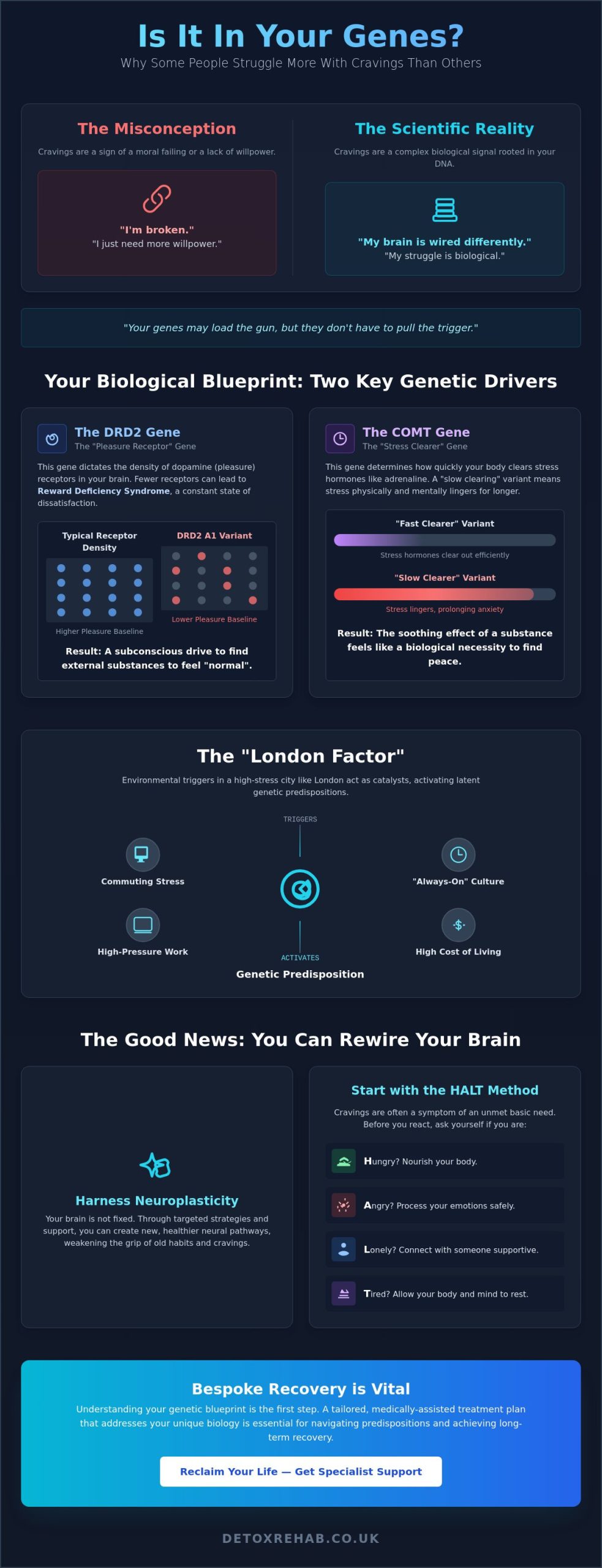
Science suggests that “genetic loading” accounts for a significant portion of why some individuals are more vulnerable to addiction than others. While one person might experience a “silent” craving, a passing thought that is easily dismissed, another may feel it as physical pain or an all-consuming mental fog. This difference is often rooted in genetic and environmental risk factors that shape the brain’s architecture long before a person takes their first drink or dose. For a Londoner, the unique stressors of urban life, such as the 24/7 “always-on” culture and high cost of living, can act as a catalyst that activates these latent genetic predispositions.
Willpower vs. Biology: The Great Misconception
The prefrontal cortex serves as the brain’s “braking system,” responsible for logical decision-making and impulse control. In many people, genetics can naturally weaken this system, making it significantly harder to say “no” when an urge strikes. While a casual user might have a robust neural “brake,” a genetically predisposed individual often deals with a system that is offline during moments of high stress. Reward Deficiency Syndrome is a primary driver of chronic cravings where the brain’s reward circuitry lacks sufficient D2 dopamine receptors, leaving a person in a constant state of dissatisfaction. This biological deficit creates a powerful, subconscious drive to find external substances to feel “normal” or “balanced.”
The Evolutionary Origin of the Craving Brain
Your brain is essentially a piece of ancient hardware trying to run modern software in the concrete jungle of London. Thousands of years ago, survival depended on seeking out calorie-dense rewards and immediate gratification to stay alive. Today, those same survival mechanisms misfire. The brain prioritises immediate chemical rewards over long-term career goals or health because it still operates on a hunter-gatherer frequency. In a fast-paced city where dopamine triggers are everywhere, from digital notifications to the ease of alcohol delivery, your evolutionary hardwiring can easily become overwhelmed. We help you understand that your brain is trying to protect you, even if its methods are currently self-destructive.
The Biological Drivers: How Genetic Markers Influence the Brain’s Reward System
When we explore why some people find it harder to say no, we have to look at the DRD2 gene. This specific marker dictates the density of dopamine receptors in your brain. If you’re born with fewer receptors, your baseline for pleasure is naturally lower. You might feel a persistent sense of “emptiness” or lack of satisfaction that substances can temporarily fill. This isn’t a failure of character; it’s a matter of chemistry. This biological reality is often compounded by the COMT gene. This gene determines how quickly your body clears stress hormones like adrenaline from your system. If your COMT variant is a “slow clearer,” stress lingers, making the soothing effect of a drink or drug feel like a biological necessity to find peace.
These markers explain the specific struggle of alcohol and drug cravings. When your brain is wired to feel stress more intensely and reward less frequently, the pull toward external substances becomes overwhelming. It’s a fundamental part of the question: Is It in Your Genes? Why Some People Struggle More with Cravings Than Others. Understanding that your struggle has a physical origin can be the first step toward self-compassion and effective healing.
Dopamine: The Currency of Desire
Dopamine isn’t just about the pleasure of the “hit”; it’s about the anticipation that drives you toward it. In a high-stimulus environment like London, your brain is constantly bombarded. From the late-night bars in Shoreditch to the aggressive digital advertising on the Tube, these cues exploit your neural pathways. If you have a genetic predisposition for low dopamine, these external triggers initiate an intense “reward-seeking” drive. You experience a sharp chemical spike followed by a debilitating crash. This crash creates a physical debt that your brain demands you repay with another dose, fueling a cycle that feels impossible to break alone.
The Role of the Liver-Brain Axis
Your cravings don’t just start in your head; they often begin in your liver. The FGF21 hormone acts as a direct messenger from the liver to the hypothalamus. Data shows that individuals with a specific FGF21 variant are 20% more likely to seek out sweets and alcohol. This liver-brain axis creates a feedback loop that often bypasses your conscious thought process entirely. Scientists have even identified a specific gene that controls food cravings and substance urges by regulating how we process high-reward inputs. When your liver signals a deficiency, your brain responds with a craving so visceral it feels like a survival instinct. We believe that acknowledging these internal signals is vital for recovery, and bespoke treatment plans can help you manage these biological triggers effectively.
The London Factor: How Environment and Epigenetics Intersect
Your DNA isn’t a fixed blueprint. It’s more like a complex musical score, and your life in London acts as the conductor. This is the essence of epigenetics. While you might wonder, Is It in Your Genes? Why Some People Struggle More with Cravings Than Others, the reality is that your environment can actually “turn on” or “mute” specific genetic markers. For the 8.9 million people living in the capital, the high-octane lifestyle does more than just tire us out. It physically alters how our bodies express our genetic code.
Living in a 24-hour city means we’re constantly exposed to triggers that our ancestors never faced. The blue light from LED streetlights in Hackney or the persistent rumble of the Night Tube disrupts our circadian rhythms. When sleep is compromised, the body’s ability to regulate glucose and dopamine falters. This biological disruption makes you more vulnerable to the genetic basis for cravings, as your brain searches for a quick energy fix or a chemical reward to compensate for exhaustion.
Stress as a Genetic Switch
London’s “always-on” culture is a primary driver of these epigenetic changes. When you’re squeezed onto a delayed Central Line carriage or facing a high-stakes presentation in Canary Wharf, your body releases cortisol. This hormone is vital for survival; however, chronic elevation creates a biological feedback loop. We’ve seen how sustained stress in the West End’s competitive industries can lead to permanent shifts in gene expression. To understand your own risks, consider this brief stress-check:
- Do you experience a physical “need” to consume sugar or alcohol after a stressful commute?
- Is your sleep frequently interrupted by urban noise pollution or light?
- Does your work environment in the City or Canary Wharf equate “success” with high-intensity social drinking?
If you answered yes to these, your environment may be activating genetic vulnerabilities that make cravings harder to resist. We’re here to help you navigate these triggers with bespoke care that acknowledges your unique biological makeup.
Social Modeling in the Capital
The sheer density of London makes “cue-induced cravings” particularly difficult to avoid. Whether it’s the smell of a pub in Soho or the celebratory champagne culture in high-pressure finance firms, these environmental cues trigger the reward centers of the brain. In these high-competition industries, peer influence significantly impacts substance use patterns. It’s easy to feel that your choices are your own, but your social circle often dictates which genes are being expressed through your behavior.
Breaking this cycle requires a shift in your social environment. The rise of “sober-curious” communities in London, which saw a 15% increase in membership according to 2023 social trend reports, offers a vital lifeline. By surrounding yourself with individuals who prioritize health, you can begin the process of healing and reclaiming your life. We believe that recovery is a partnership, and finding the right community is a logical step in your journey toward empowerment and a new beginning.
Rewiring the Response: Practical Steps to Override Genetic Cravings
Your brain is not a static organ. While you may have spent years feeling at the mercy of your impulses, the science of neuroplasticity proves that you can forge new, healthier neural pathways. Understanding the science behind Is It in Your Genes? Why Some People Struggle More with Cravings Than Others is the first step toward reclaiming your autonomy. We work with you to move from a state of reactive survival to one of conscious choice.
Before you can rewire these pathways, you need a reliable first line of defence. The HALT method is a simple yet clinical tool we recommend to pause the cycle of craving. When an urge strikes, stop and ask if you are Hungry, Angry, Lonely, or Tired. Research indicates that approximately 60% of relapse triggers are tied to these basic physiological and emotional imbalances. By addressing the underlying need, you often find the intensity of the craving diminishes within 15 to 20 minutes.
Living in a fast-paced environment like London requires specific grounding techniques. During a stressful commute on the Central Line or a crowded bus, try “box breathing.” Inhale for four seconds, hold for four, exhale for four, and hold for four. This practice lowers cortisol levels and shifts your nervous system from “fight or flight” back to a state of calm, making it easier to manage genetic predispositions toward impulsivity.
Biological Interventions You Can Control
Your diet directly influences the chemical messengers in your brain. Protein-rich foods provide essential amino acids, such as tyrosine, which act as precursors to dopamine. By stabilising these levels through nutrition, you can reduce the frequency of sudden urges. We suggest spending at least 15 minutes in a London green space, like Hyde Park or Richmond Park, to absorb natural sunlight. This boosts serotonin and helps regulate your mood against the greyest of London afternoons. To lower next-day cravings, establish a sleep hygiene routine that includes turning off all digital screens 60 minutes before bed to ensure your prefrontal cortex is fully rested and ready to exercise willpower.
Cognitive Reframing for Urge Surfing
Cognitive tools allow you to change how you perceive a craving. We teach a technique called “Urge Surfing,” where you view a craving as a wave in the ocean. It will rise, peak in intensity for about 20 to 30 minutes, and then inevitably subside. You don’t need to fight the wave; you simply ride it out until it reaches the shore. While the question Is It in Your Genes? Why Some People Struggle More with Cravings Than Others helps us identify your unique vulnerabilities, these practical tools empower you to change the outcome.
Implementation Intentions are also vital for navigating social situations in the city. If you’re heading to a work event in Soho, use “If-Then” planning: “If I am offered a drink, then I will ask for a sparkling water with lime immediately.” This removes the need for split-second decision-making when your willpower might be low. Remember the rule to “delay, don’t deny.” Telling yourself you can have the substance in 15 minutes often gives the craving enough time to dissipate entirely.
If you feel that your genetic makeup is making the journey to recovery feel impossible, we are here to provide the clinical support and bespoke care you deserve. Contact our specialist team today to begin your journey toward a new beginning.
Bespoke Recovery: Tailoring Treatment to Your Biological Blueprint
Generic, one-size-fits-all rehabilitation programs often fail those with a high genetic predisposition to addiction because they ignore the physical reality of a hyper-reactive reward system. When you’re asking, Is It in Your Genes? Why Some People Struggle More with Cravings Than Others, you’re recognizing that your recovery journey requires more than just standard counseling. It demands a clinical strategy that addresses the specific ways your brain processes dopamine and handles stress. We believe that understanding your biological makeup is the key to unlocking a successful, long-term recovery.
Medically-assisted detox is a critical component of this tailored approach. It provides a safe, clinical environment where specialists use evidence-based protocols to manage the biological intensity of withdrawal. For those with genetic markers that make cravings more acute, this medical intervention isn’t a luxury; it’s a necessity for stabilizing brain chemistry. Residential treatment further supports this by providing a “biological circuit break” from the high-octane environment of London. By removing yourself from the specific triggers of the capital, you allow your reward system to reset without the constant noise of the city’s stressors. Detox Rehab Clinics UK serves as your professional guide, helping you navigate the complex landscape of private care to find the specific London services that align with your genetic profile.
Finding Specialist Care in London
London is home to world-renowned clinics, particularly in Harley Street and the surrounding areas, that specialize in dual diagnosis and neuro-biological addiction treatment. These facilities don’t just treat the symptoms; they look at the underlying genetic and psychological factors. Private residential rehab offers a structured environment where you can focus entirely on healing. We encourage you to reach out for a no-obligation consultation. We’ll help you map out a bespoke treatment plan that prioritizes your unique biological needs and provides the clinical authority required for a lasting change.
Reclaiming Your Life in the Capital
Your genes are merely the starting point of your journey, not the final word on your future. While your DNA might influence how you experience cravings, it doesn’t dictate your ability to live a fulfilled, sober life. Empowerment comes from understanding your biology and using that knowledge to build a stronger defense. Recovery continues long after you leave a clinic, and London offers a wealth of long-term aftercare support groups to keep you grounded. You have the strength to rewrite your story, and we’re here to provide the expert support you need to begin. Speak to a London recovery specialist today and take the first step toward a new beginning.
Take Control of Your Biological Blueprint
Understanding the science behind addiction shifts the focus from personal failure to clinical reality. Your genetic makeup and the high-pressure environment of London create a unique set of challenges for your recovery. While you may ask, Is It in Your Genes? Why Some People Struggle More with Cravings Than Others, it’s important to remember that biology isn’t destiny. By identifying specific genetic markers and environmental triggers, we help you develop a bespoke roadmap to override these deep-seated responses and reclaim your life.
We’re here to guide you through every step of this process. Our team provides independent advice covering over 300 UK treatment centres, ensuring you find the right fit for your specific biological needs. Based in the heart of London, we possess deep knowledge of local private clinics and offer 24/7 immediate support rooted in clinical empathy. You deserve a recovery plan that’s as unique as your DNA. Start your journey toward healing today with a professional partner who understands the complexities of the human brain and the urgency of your situation.
Get a free, confidential assessment from our London-based addiction experts
Recovery is a path we walk together, and your new beginning starts with a single, supported step.
Frequently Asked Questions
Is addiction 100% genetic, or can I control it?
Addiction isn’t a pre-destined fate because genetics only account for about 40% to 60% of your vulnerability according to the National Institute on Drug Abuse. While your DNA might make you more susceptible to intense cravings, your environment and personal choices play a massive role in recovery. You have the power to influence how these genes express themselves through lifestyle changes and professional support. We’re here to help you regain that control through bespoke treatment plans tailored to your unique biological profile.
Why do I crave sugar or alcohol more when I am stressed at work in London?
Your brain seeks a dopamine hit to counter the high cortisol levels produced by London’s high-pressure work environments. When stress levels spike, the prefrontal cortex weakens, making it harder to resist sugar or alcohol. A 2021 study in the Journal of Endocrinology found that chronic stress directly alters the neural pathways responsible for impulse control. This creates a cycle where your body demands a chemical fix to cope with the city’s relentless pace.
Can genetic testing tell me if I will become an addict?
Genetic testing cannot provide a definitive answer, but it identifies specific markers that increase your risk profile. For instance, the A1 allele of the DRD2 gene is found in a higher percentage of people with substance use disorders compared to the general population. Understanding Is It in Your Genes? Why Some People Struggle More with Cravings Than Others helps us customise your detoxification process. While tests offer data, they don’t account for the complex interplay of your life experiences.
How long does it take for the brain to “rewire” after stopping a substance?
Most people see significant neurological repair within the first 90 days of abstinence. However, research from the Journal of Neuroscience indicates that it takes 14 months for the brain’s dopamine transporters to return to near-normal levels. This period of neuroplasticity is when the brain physically reshapes itself. We provide the clinical guidance you need during this delicate year of healing to ensure your new, healthy habits become permanent fixtures in your life and support your long-term recovery.
Are there specific London-based support groups for people with high cravings?
London offers an extensive network of support, with over 600 weekly Alcoholics Anonymous meetings and numerous SMART Recovery groups in boroughs like Westminster and Camden. These groups provide a community of peers who understand the specific triggers of city life. Many of these sessions focus on Cognitive Behavioural Therapy techniques to manage intense physiological urges. We’ll help you navigate these local resources to find a group that aligns with your personal values and recovery goals.
What is the most effective way to stop a craving in the moment?
Urge surfing is a proven mindfulness technique that involves acknowledging the craving without acting on it until it passes. Most cravings peak within 15 minutes and subside shortly after. By focusing on your breath and observing the physical sensations without judgment, you take the power away from the impulse. This method helps you realise that a craving is a temporary wave rather than a permanent command. It’s a vital tool we teach to help you maintain sobriety.
Does my family history of alcoholism mean I am doomed to struggle?
A family history of alcoholism doesn’t guarantee you’ll follow the same path, even though it increases your statistical risk by 4 times. Genetics load the gun, but environment pulls the trigger. By understanding Is It in Your Genes? Why Some People Struggle More with Cravings Than Others, you can take proactive steps to protect your health. Many people with a strong genetic predisposition live lives of complete sobriety by using the right tools and professional intervention early on; for younger individuals in Alberta, thriveteens.ca provides specialized support for navigating these biological vulnerabilities early in life.
How can Detox Rehab Clinics UK help me find a clinic that understands genetics?
We match you with CQC-registered facilities that use bio-psycho-social assessments to create tailored treatment plans. Our team is available 24 hours a day to guide you through the selection process, ensuring you find a clinic that offers the latest evidence-based treatments. We’re here to ensure your journey toward a new beginning is supported by clinical excellence and genuine compassion. We focus on finding you a placement that addresses your specific biological vulnerabilities and metabolic health.