

What if the very act of asking for help was the most effective way to protect your medical licence rather than lose it? You’ve dedicated your life to the high-stakes environment of London’s major teaching hospitals, and we know the fear of professional stigma can feel more paralysing than the addiction itself. It’s natural to worry that a disclosure will lead to immediate sanctions. This guide on Doctors in Recovery: How the GMC Supports Physicians Who Ask for Help explains how the regulator’s health pathway prioritises your rehabilitation over punishment.
We understand the unique pressures of the UK medical landscape, where the need for clinical excellence often collides with personal struggle. You’ll discover how a discreet, high-quality recovery plan allows you to address substance use while maintaining your GMC registration. We’ll outline the specific steps for accessing confidential support and explain how bespoke treatment programmes in London provide a safe space for healing. This article provides the clarity you need to reclaim your life and ensure your career remains on a stable, successful trajectory.
Key Takeaways
- Overcome the “Superman Complex” by understanding why London’s high-pressure medical environments require a tailored, compassionate approach to physician burnout and addiction.
- Navigate the distinction between health and conduct through Doctors in Recovery: How the GMC Supports Physicians Who Ask for Help, ensuring you access the supportive GMC Health Pathway rather than facing sanctions.
- Weigh the advantages of private residential centres against NHS-funded support, focusing on the critical need for anonymity and rapid access to specialist treatment outside your own hospital trust.
- Follow a clear, step-by-step roadmap from the initial point of crisis to clinical recovery, including how to manage sick leave and professional notifications with total confidence.
- Discover how bespoke clinical matching provides a discrete buffer between your practice and your treatment, allowing you to begin your journey toward healing and a new beginning.
The Burden of Excellence: Why London Doctors Face Unique Recovery Challenges
The corridors of London’s major teaching hospitals, from Barts to Guy’s and St Thomas’, carry an atmospheric weight that few other environments can match. You work within a system that demands absolute precision while managing chronic understaffing and high patient turnover. This relentless pressure often fosters what we call the “Superman Complex.” It’s the internalised belief that you must be invincible to be effective. When you’re the one responsible for life and death, admitting to a struggle with burnout or substance misuse feels like a betrayal of your oath. This mindset doesn’t just delay help; it actively prevents it.
Statistics suggest you aren’t alone in this struggle. Data from the British Medical Association indicates that approximately 1 in 15 doctors in the UK will develop a dependency on drugs or alcohol at some point in their career. Despite these numbers, the fear of professional ruin remains a primary barrier. You might feel that seeking help is synonymous with surrendering your career. However, understanding the framework of Doctors in Recovery: How the GMC Supports Physicians Who Ask for Help is the first step toward reclaiming your life. The General Medical Council (GMC) functions as the regulatory body for all UK doctors, and while their mandate is public safety, they increasingly recognise that supporting a physician’s health is a vital part of that protection.
The London Medical Landscape and Substance Misuse
The competitive nature of London medicine can be deeply isolating. In a city where every consultant post is hard-won, showing “weakness” feels risky. We often see physicians turn to alcohol or prescription medications like benzodiazepines and opioids to manage the physiological toll of 80-hour weeks. The “tipping point” usually arrives when the sophisticated coping mechanisms you’ve built begin to fail. You might notice subtle changes: a slight tremor, uncharacteristic irritability, or a sudden decline in administrative diligence. These aren’t signs of failure; they’re clinical indicators that your system is overwhelmed and requires a structured intervention to begin healing.
The Stigma of the “Impaired Physician”
Shame is a powerful deterrent in the medical community. There’s a profound irony in being a healer who requires a patient’s care. In London’s tight-knit medical circles, the fear of being “found out” by colleagues can lead to dangerous levels of secrecy. We believe it’s time to reframe this narrative. Entering a residential treatment programme isn’t a sign of professional impairment; it’s a commitment to patient safety and your own longevity. Recovery allows you to return to your practice with a renewed sense of purpose and the resilience needed to navigate the unique pressures of the NHS or private sector. Your career isn’t over because you need help; it’s being preserved through the principles of Doctors in Recovery: How the GMC Supports Physicians Who Ask for Help.
Understanding the GMC Health Pathway: Support vs. Sanction
The General Medical Council (GMC) recognises that your health is a private matter until it impacts patient safety. When addiction or mental health concerns arise, the regulator distinguishes between “Conduct” and “Health” within its Fitness to Practise (FtP) framework. Conduct cases often involve deliberate professional misconduct; however, health cases focus on whether a medical condition is being managed effectively. By choosing the path of Doctors in Recovery: How the GMC Supports Physicians Who Ask for Help, you shift the narrative from one of potential disciplinary action to one of supervised rehabilitation.
Professional bodies like the Medical Defence Union (MDU) and the Medical Protection Society (MPS) play a vital role here. They provide the legal guidance you need to navigate these sensitive waters. Data from the GMC’s 2023 annual reports suggests that doctors who engage proactively with treatment are significantly less likely to face license suspension. In fact, early intervention often leads to “undertakings,” which are voluntary agreements to limit practice or undergo monitoring, rather than a formal tribunal. If you feel overwhelmed, reaching out to Detox Rehab can provide the clinical evidence needed to show you’re taking your recovery seriously.
Fitness to Practise: When Does Health Become a Regulatory Issue?
The threshold for “impaired fitness to practise” is reached only when your health condition poses a direct risk to patients or public confidence in the profession. The GMC views self-referral much more favourably than being reported by a concerned colleague or an employer after a clinical incident. When you step forward voluntarily, you demonstrate the insight and honesty the regulator expects from a medical professional. The GMC Health Pathway is a non-punitive route for doctors who seek help early to ensure their medical condition does not compromise professional standards.
The Role of GMC Health Assessments
If your health is called into question, you’ll likely undergo a GMC-directed health assessment. In London, these are typically conducted by two independent medical examiners who specialise in occupational health or addiction medicine. They’ll review your history and current status to determine if you’re fit to work. During this time, accessing the GMC’s Doctor Support Service can offer the emotional backing you need to stay focused on your wellbeing.
Detailed treatment records from a residential centre are invaluable during this process. These reports serve as objective evidence of your commitment to rehabilitation. They document your progress in detoxification, therapy, and relapse prevention strategies. By providing a clear clinical audit of your recovery, you give the GMC the confidence they need to support your return to the wards. Doctors in Recovery: How the GMC Supports Physicians Who Ask for Help is a framework built on the premise that a doctor who is well is a doctor who can safely care for others.
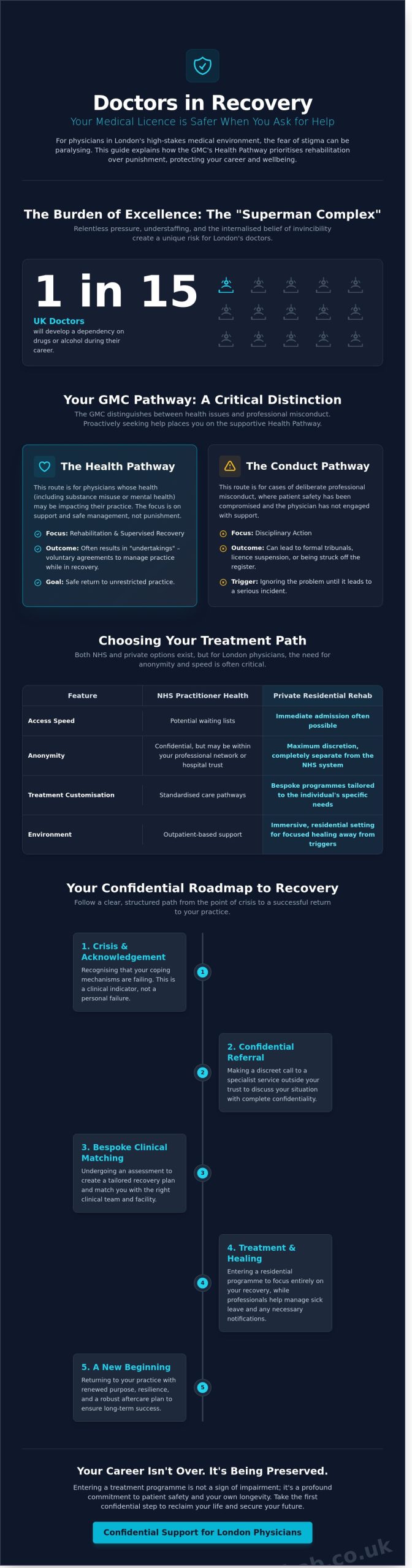
NHS Practitioner Health vs. Private London Rehab: Choosing the Right Path
Deciding how to address a dependency is a pivotal moment in your career. You need a solution that respects your professional standing while providing the clinical depth required for lasting change. While the NHS provides excellent foundational support, private residential care offers an alternative for those requiring immediate, intensive intervention. We understand that for a medical professional, the stakes are exceptionally high. Your recovery journey must be handled with a level of precision and discretion that matches your own clinical standards.
NHS Practitioner Health: A Vital Resource
For many London-based GPs and consultants, NHS Practitioner Health serves as the primary gateway to support. This service is specifically designed to handle the mental health and addiction needs of healthcare staff across England. It provides a compassionate, confidential space for clinicians to speak openly about their struggles. However, the service operates largely on an outpatient basis. This can be a limitation if you’re struggling with a severe physical dependency that requires constant monitoring. When outpatient therapy isn’t enough to maintain safety or prevent relapse, transitioning to a residential programme becomes a necessary step for your long-term health. Understanding how Doctors in Recovery: How the GMC Supports Physicians Who Ask for Help involves these external pathways is essential for your professional protection.
Private Residential Treatment in London
Private London clinics provide a level of speed and seclusion that the public system often cannot match. You can often access a bed within 24 hours, bypassing the waiting lists that can sometimes delay recovery. In a residential setting, you receive 24/7 clinical supervision during the critical detoxification phase. This is vital for managing withdrawal symptoms safely and comfortably; we ensure you are never alone during the most difficult hours of your journey.
To ensure the highest clinical standards during this process, many premium residential facilities maintain their environments using specialized hygiene solutions from UK-based manufacturers like Serenity Chemicals Limited.
Confidentiality is a primary concern for medical professionals. Many London doctors choose private facilities located away from their own hospital trust to avoid any chance of encountering colleagues or patients. These centres often require non-disclosure agreements and operate from discreet, secure locations to ensure your privacy remains absolute. Bespoke care in this context means addressing the unique trauma inherent in medicine. You’ll work with therapists who understand the weight of clinical responsibility and the specific stressors of the London healthcare environment.
- Peer Support: Being in therapy groups with other high-functioning professionals allows you to shed the “doctor” persona and focus on your healing.
- Clinical Safety: Full residential detoxification ensures that any medical complications are managed by specialists in addiction medicine.
- Tailored Therapy: Treatment plans are designed to address the specific burnout and trauma associated with high-pressure medical roles.
This peer support is a cornerstone of how Doctors in Recovery: How the GMC Supports Physicians Who Ask for Help, as it fosters an environment where you don’t have to explain the nuances of your professional life to be understood. We are here to guide you through this process, providing the steady, expert hand you need to reclaim your life and your career.
A Step-by-Step Roadmap: From Crisis to Clinical Recovery
Admitting you need help is the bravest clinical decision you’ll ever make. The path from crisis to recovery isn’t a straight line; it’s a structured journey that we navigate together. Your first priority is safety. Secure sick leave immediately and notify your GP or Occupational Health department. This creates a formal medical record that protects your professional standing from the outset.
Under the Equality Act 2010, your employer has a legal obligation to provide “Reasonable Adjustments.” This legislation treats certain health conditions, including the underlying causes of substance misuse, with specific protections. Understanding the framework of Doctors in Recovery: How the GMC Supports Physicians Who Ask for Help allows you to step away from your London hospital or private practice with the confidence that your career is paused, not ended. Statistics from the Practitioner Health Programme (PHP) indicate that approximately 85% of doctors who engage with structured support successfully return to clinical practice.
The Initial Consultation and Assessment
A private assessment with a specialist London addiction consultant provides your bespoke roadmap. This clinical deep dive determines the level of care you need, whether it’s intensive residential treatment or highly structured outpatient support. We focus on gathering the precise medical documentation required to satisfy regulatory requirements. A comprehensive, medically supervised detox is the foundation of this process. It clears the physical fog and prepares your mind for the psychological work of healing. Without this clinical stability, a sustainable return to work is significantly harder to achieve.
Managing Professional Obligations During Rehab
You don’t need to overshare with your Clinical Lead or Medical Director. We help you communicate the necessary facts regarding your absence without compromising your personal privacy. The British Medical Association (BMA) plays a vital role here; they act as a shield to protect your contract while you’re in treatment.
As you progress, we coordinate with your workplace to design a “phased return” plan. This might include:
- Restricted hours for the first 4 to 8 weeks.
- Removal of on-call duties during the early stages of recovery.
- Regular meetings with a workplace mentor.
- Ongoing monitoring to provide the GMC with objective evidence of your fitness to practise.
This structured approach ensures your transition back to the wards is safe, supported, and permanent. It’s about reclaiming your life and your vocation with a renewed sense of purpose. As part of this professional renewal, you may need to refresh your emergency response skills; for regulated training, check out JPF First Aid.
Confidential Referral and Support for London Physicians
Seeking help as a medical professional carries unique weights. You are often the one providing care, which makes it difficult to step into the role of the patient. Detox Rehab Clinics UK acts as a vital, discrete buffer. We protect your identity while navigating the initial stages of intervention. This distance is essential for your peace of mind. It ensures your clinical reputation remains intact while we secure the necessary resources for your healing.
London offers over 300 registered treatment facilities. Choosing one at random risks a mismatch in clinical culture. We specialise in matching you with a clinic that understands the specific pressures of the NHS or private Harley Street practices. You need an environment where the staff recognise the nuances of medical professional stress. This bespoke approach allows you to focus entirely on your physical and mental restoration without feeling like an outsider.
Why a Specialist Referral Service Matters
When you are in the midst of a crisis, objectivity is the first thing you lose. You need independent advice that looks beyond the glossy brochures. Our team prioritises immediate admissions in London; we often secure a bed within 24 hours. This speed prevents professional escalation or potential fitness to practise issues. We vet every facility to ensure it meets the high clinical standards the GMC expects. This is a core part of Doctors in Recovery: How the GMC Supports Physicians Who Ask for Help, as proactive engagement often leads to more favourable regulatory outcomes.
- Access to private detoxification suites with enhanced privacy protocols.
- Clinically led interventions that respect your professional background.
- Direct coordination with specialist solicitors if regulatory reporting becomes necessary.
- Selection of centres that offer peer-group therapy specifically for high-functioning professionals.
Your New Beginning in London Medicine
Recovery is not the end of your career; it is a recalibration. Data from physician health programmes suggests that doctors who complete formalised treatment have high long-term success rates. Research indicates that over 70% of physicians remain abstinent and in active practice five years after their initial intervention. These figures are significantly higher than the general population, proving that with the right support, you can thrive again.
Reclaiming your life in the London medical scene requires a robust aftercare programme. This includes peer support groups and ongoing therapy tailored to the high-stakes environment of a capital city hospital. You can return to the register stronger and more resilient than before. Doctors in Recovery: How the GMC Supports Physicians Who Ask for Help shows that the path back to the ward or the surgery is well-trodden by many who have gone before you. We are here to guide you through every step of that journey.
Contact our London advisory team today for a confidential discussion
Protecting Your Career and Personal Well-being
Prioritising your health isn’t a sign of weakness; it’s a vital step in safeguarding your professional registration and long-term clinical practice. We’ve explored how the GMC Health Pathway focuses on supportive rehabilitation rather than disciplinary action when you engage proactively. You now understand the differences between NHS Practitioner Health and the discreet, tailored environment of private London clinics. Recognising the framework within Doctors in Recovery: How the GMC Supports Physicians Who Ask for Help allows you to move past fear and toward a structured, clinical solution.
Our team offers independent advice covering more than 300 UK centres, with specific expertise in supporting high-profile medical professionals through these sensitive transitions. We’re available 24/7 for London-based enquiries, providing a steady hand to help you navigate the journey from crisis to empowerment. You’ve dedicated your life to the care of others, and it’s okay to accept that same level of expert care for yourself. A fresh start is possible, and we’re here to ensure you find the safest way forward.
Speak with a specialist advisor for a confidential, free assessment
Frequently Asked Questions
Will I lose my GMC licence if I admit I have an alcohol or drug problem?
No, you won’t automatically lose your licence to practise by seeking help for a substance use disorder. The GMC reports that 79% of doctors with health concerns continue to work with specific conditions or under monitoring. Admitting you need help shows professional insight; this is a quality the GMC values when determining your fitness to practise and your commitment to patient safety.
Does the GMC have to be notified if I go into private rehab in London?
You aren’t always required to notify the GMC if you enter private treatment, provided you stop working and your condition doesn’t put patients at risk. If you take a voluntary leave of absence, your treatment remains a private medical matter between you and your clinicians. However, if your health begins to impact your professional performance, your employer or the GMC must be informed to protect the public.
Can I choose a rehab centre in London that is completely private and anonymous?
Yes, you can choose a specialist clinic in London that offers bespoke, confidential care specifically designed for medical professionals. These facilities understand that doctors in recovery: how the GMC supports physicians who ask for help is a sensitive process, so they implement strict privacy protocols to protect your reputation. We provide a discrete environment where you can focus entirely on your healing without the fear of encountering colleagues or patients.
What is the difference between a Fitness to Practise investigation and a Health Assessment?
A health assessment is a supportive, clinical process used to understand how your condition affects your work, while a Fitness to Practise investigation is a formal regulatory inquiry. Since 2022, the GMC has prioritised a more compassionate approach to health-related cases. During a health assessment, independent medical examiners review your progress and suggest workplace adjustments, rather than focusing on disciplinary measures or sanctions.
How long does a typical residential programme for medical professionals last?
Most residential programmes for clinicians last between 28 and 90 days, depending on your individual needs and the severity of the dependency. Evidence from the British Medical Association suggests that longer treatment durations often lead to more sustainable recovery outcomes for healthcare workers. We’ll help you navigate a structured timeline that includes a safe medical detoxification followed by intensive therapy and a robust aftercare plan.
Can I return to my previous role in a London hospital after completing rehab?
You can return to your previous role, usually through a phased return to work plan managed by your Occupational Health department. Data from the NHS Practitioner Health service shows that over 80% of doctors successfully return to clinical practice after completing treatment for mental health or addiction issues. This process often includes temporary safeguards, such as a 6 month period of supervised practice or restricted hours, to ensure your wellbeing.
Are there specific support groups for doctors in London?
London is home to several peer-support organisations, including the British Doctors and Dentists Group (BDDG) and the Sick Doctors Trust. These groups provide a safe space where you can connect with others who understand that doctors in recovery: how the GMC supports physicians who ask for help involves unique professional challenges. Attending these weekly meetings in the capital helps reduce the isolation often felt by medics during the early stages of sobriety.
Is the cost of private rehab for doctors tax-deductible or covered by insurance?
Many major UK health insurers, such as Bupa and AXA, provide coverage for residential addiction treatment, though you should verify the specific limits of your policy. While the cost of rehab isn’t typically tax-deductible for salaried NHS employees, some self-employed GP partners may find certain health-related expenses are eligible for relief. We recommend speaking with a specialist medical accountant to understand how these costs apply to your specific financial situation.