

Imagine standing in a queue at a London tube station, unable to focus on your commute because your bladder feels like it’s filled with shards of glass. For many, this isn’t a one-off discomfort; it’s a daily reality that forces them to plan every minute around the nearest toilet or even rely on adult nappies to get through the day. If you’re struggling with these symptoms, you may be caught in The K-Bladder Crisis: Why Your Pelvic Pain Might Be Linked to Ketamine Use. Clinical reports indicate that frequent users can find themselves needing to urinate every 15 minutes, a cycle that quickly leads to physical exhaustion and social withdrawal.
We understand that the excruciating pressure and the sight of blood in your urine are terrifying. It’s a deeply isolating experience, but you don’t have to face it alone. This article will help you discover the critical link between ketamine use and debilitating pelvic pain, while providing a clear path to access specialist recovery support in London before damage becomes irreversible. We’ll examine the medical reality of ketamine-induced cystitis and the confidential, bespoke treatment options available to help you reclaim your health and your future.
Key Takeaways
- Understand the growing prevalence of ketamine-induced cystitis in London and why this severe inflammatory condition requires immediate clinical attention.
- Explore the medical reality behind The K-Bladder Crisis: Why Your Pelvic Pain Might Be Linked to Ketamine Use, including how toxic metabolites create a dangerous cycle of chronic pain.
- Learn to distinguish between common urinary tract infections and the “red flag” symptoms of ketamine damage to ensure you receive the correct specialist support.
- Discover how to break the cycle of dependency through guided cessation and bespoke pain management strategies designed to help your body begin the healing process.
- Gain expert insights into accessing private, compassionate recovery care in London that specialises in treating the physical and emotional impact of ketamine use.
Understanding the Ketamine Bladder Crisis in London
London’s healthcare landscape is facing a quiet but devastating challenge. A growing number of young Londoners, from City professionals to weekend clubbers in Hackney, are reporting chronic pelvic pain and urinary distress. This isn’t a standard infection. It’s a condition known as Ketamine-Induced Cystitis, or “K-bladder.” Understanding The K-Bladder Crisis: Why Your Pelvic Pain Might Be Linked to Ketamine Use is the first step toward reclaiming your health and finding a path to recovery.
If you’re experiencing these symptoms, you might feel isolated or ashamed. We want you to know that you’re not alone. Our London-based clinics see people from all walks of life who’ve found themselves trapped by this substance. We provide a confidential, non-judgmental space where your physical pain and your journey with ketamine are treated with equal compassion. Healing is possible, and it starts with expert medical insight.
What is K-Bladder Syndrome?
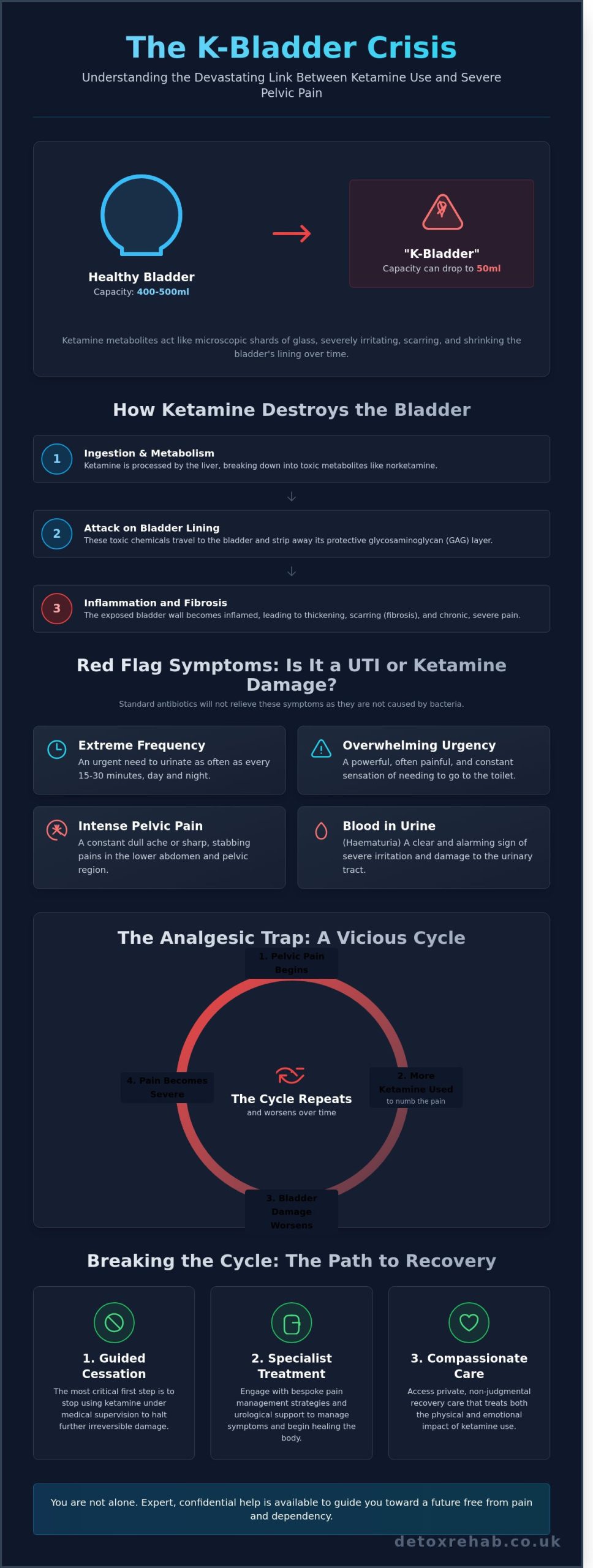
K-bladder occurs when ketamine is processed by your body. The drug breaks down into toxic metabolites that are excreted through the kidneys and stored in the bladder. These metabolites act like microscopic shards of glass, severely irritating the urothelium, which is your bladder’s protective lining. Over time, this inflammation leads to fibrosis. Your bladder wall thickens and scars, causing the organ to physically shrink. A healthy bladder holds 400ml to 500ml of fluid, but in severe cases of urologic diseases caused by ketamine, capacity can drop to as little as 50ml. This isn’t a bacterial issue, so standard antibiotics won’t provide relief.
The Rise of Ketamine Use in London Centres
The availability of “Ket,” “Special K,” or “Wonk” has surged across London’s nightlife scenes over the last five years. Data from 2023 indicates that ketamine use among 16 to 24 year olds in the UK has tripled since 2013. London urologists are now treating patients as young as 18 for conditions that were once only seen in elderly patients with chronic bladder disease. The “silent epidemic” of pelvic pain in the capital is often linked to the high purity and low cost of the drug in local markets.
- Increased frequency: Needing to urinate every 15 to 30 minutes.
- Haematuria: Finding blood in your urine after use.
- Pelvic pressure: Constant, dull aching or sharp stabs in the lower abdomen.
- Urgency: An overwhelming, painful need to go that cannot be ignored.
We understand the fear that comes with these symptoms. Our team is here to guide you through a bespoke detoxification and treatment plan. You don’t have to manage this pain in silence. We offer immediate, round-the-clock support to help you move past the crisis and toward a new beginning.
The Medical Reality: How Ketamine Causes Chronic Pelvic Pain
Understanding the biological impact of ketamine is the first step toward reclaiming your health. When you ingest ketamine, your liver processes the drug into metabolites like norketamine. These substances are particularly destructive to the delicate lining of your urinary tract. As these chemicals travel to the bladder, they act like microscopic abrasives. They strip away the protective glycosaminoglycan (GAG) layer, leaving the sensitive bladder wall exposed to the acidic environment of your urine. This direct chemical trauma is the root cause of The K-Bladder Crisis: Why Your Pelvic Pain Might Be Linked to Ketamine Use.
The damage isn’t confined to the bladder lining. Your pelvic floor muscles often respond to this constant internal irritation by entering a state of chronic contraction. This neurological feedback loop creates “hypertonicity,” where the muscles cannot relax. This results in the persistent, heavy pressure and sharp stabs of pain that many users experience in their lower abdomen and pelvic region. Following advice from the British Association of Urological Surgeons is vital for anyone noticing these changes, as early cessation is the only way to halt this physiological decline.
The Analgesic Trap
Ketamine is a potent dissociative anaesthetic, which creates a dangerous paradox for the user. When the bladder begins to ache, you might instinctively use more ketamine to numb the very pain the drug is causing. This provides a few hours of relief, but it accelerates the chemical destruction of your tissues. The “analgesic trap” is a primary barrier to recovery because it creates a cycle of self-medication that masks the physical urgency of the situation.
Long-term Consequences if Left Untreated
If use continues, the bladder undergoes a process called fibrosis. This is where healthy, elastic tissue is replaced by stiff, non-functional scar tissue. While a healthy adult bladder typically holds 400ml to 600ml of urine, end-stage K-bladder can shrink to a capacity of just 30ml. This leads to extreme urinary frequency, sometimes requiring a toilet visit every 15 minutes.
- Hydronephrosis: Scarring can block the tubes leading from the kidneys, causing them to swell with fluid.
- Kidney Failure: Approximately 20% of chronic users with bladder symptoms show signs of renal impairment.
- Social Isolation: The psychological toll of navigating London’s limited public toilet network while in constant pain often leads to severe depression and withdrawal from city life.
The urgency of seeking help cannot be overstated. When caught early, the bladder has a remarkable ability to heal, but once significant fibrosis occurs, radical surgery such as a cystectomy (bladder removal) may become the only option. We can help you explore a bespoke treatment programme that prioritises your physical comfort and long-term recovery.
Is it a UTI or Ketamine Cystitis? Spotting the Symptoms
Distinguishing between a routine infection and the onset of ketamine cystitis is vital for your long-term health. While a standard Urinary Tract Infection (UTI) usually clears after a five-day course of antibiotics like nitrofurantoin, K-bladder symptoms persist and often intensify despite medical treatment. You might find yourself rushing to the toilet up to 60 times in a single 24-hour period. This frequency is exhausting and isolating. It’s a clear sign that the bladder wall is under extreme duress. Many Londoners we support describe the distressing presence of “jelly-like” clots or visible blood in their urine. These clots are actually pieces of the bladder’s protective lining that have been shed due to chemical irritation. Understanding The K-Bladder Crisis: Why Your Pelvic Pain Might Be Linked to Ketamine Use begins with recognising that these aren’t just “side effects,” they’re signs of organ damage.
Key Diagnostic Differences
If you’ve completed multiple rounds of antibiotics from your local GP without any relief, the cause is likely chemical rather than bacterial. Ketamine metabolites are incredibly caustic; they physically “shred” the delicate lining of the urinary tract. London urologists often use cystoscopies, which involve a small camera, to view this damage directly. They frequently find a “weeping” or bleeding bladder surface that cannot be fixed by pills alone. The British Association of Urological Surgeons on Ketamine Bladder highlights that this condition can lead to permanent bladder shrinkage if the drug use continues. We suggest keeping a 48-hour “bladder diary” before any consultation. Record every drink, every trip to the bathroom, and the intensity of your pelvic pain to help specialists provide a bespoke care plan.
When to Seek Urgent Help in London
Certain red flags warrant an immediate visit to an A&E department at hospitals like St Thomas’ or UCLH. If you’re unable to pass urine at all, or if you experience sharp, stabbing pains in your kidneys, you need urgent intervention. The “K-hole” effect often masks these physical warning signs because the drug acts as a powerful anaesthetic. You might not realise the extent of the damage until the sedative effects wear off. To help your doctor, bring a checklist of these symptoms to your appointment:
- Passing visible blood or dark, “rusty” coloured urine.
- Severe pain in the lower back or flanks, indicating kidney involvement.
- Incontinence or an inability to hold urine for more than 10 minutes.
- A history of “K-cramps” or intense abdominal spasms.
Addressing The K-Bladder Crisis: Why Your Pelvic Pain Might Be Linked to Ketamine Use requires total honesty with your medical team. They’re there to provide a lifeline, not to judge your choices. Early detection is the most effective way to prevent the need for major reconstructive surgery later in life.
Breaking the Cycle: How to Treat Ketamine Bladder Damage
Healing begins the moment the cycle of use stops. Addressing the damage caused by The K-Bladder Crisis: Why Your Pelvic Pain Might Be Linked to Ketamine Use requires a structured, four-step clinical pathway designed to restore both your physical health and your emotional wellbeing. We focus on a holistic recovery that moves beyond simple abstinence.
- Absolute Cessation: This is the non-negotiable first step. Stopping all ketamine intake allows the protective glycosaminoglycan (GAG) layer of the bladder to begin the slow process of regeneration.
- Non-Dissociative Pain Management: We move away from the “ketamine-for-pain” trap. Doctors use specialized nerve blockers or anti-inflammatories that don’t trigger the urge to use again.
- Urological Rehabilitation: London-based specialists use bladder retraining techniques to increase capacity, helping you move past the need to urinate every 15 minutes.
- Integrated Addiction Therapy: We treat the underlying trauma or anxiety that led to drug use. Without addressing the root cause, the physical healing remains vulnerable to relapse.
Medical Interventions in London
London is home to world-leading urological care for ketamine-induced cystitis. One common treatment involves bladder instillations, often called “cocktails.” These are liquid medications, such as hyaluronic acid or chondroitin sulphate, inserted directly into the bladder via a catheter to coat the damaged lining. Doctors may also prescribe Pentosan Polysulfate, an oral medication specifically designed to repair the bladder wall. For many, pelvic floor physiotherapy at specialized London clinics helps relax the hypertonic muscles that contribute to chronic pelvic pain. These targeted therapies provide a 60% improvement in comfort for patients who remain abstinent.
If you are struggling with the physical and emotional weight of addiction, our team provides the expert care you need. Contact Detox Rehab today to begin your journey toward a pain-free life.
The Role of Supervised Detox
Attempting to go “cold turkey” at home is exceptionally difficult when you’re in physical agony. The intense pain of The K-Bladder Crisis: Why Your Pelvic Pain Might Be Linked to Ketamine Use often drives people back to the drug for temporary relief, creating a dangerous loop. A medically supervised detox in a London residential centre changes this dynamic. You’ll have 24/7 access to clinical staff who manage withdrawal symptoms and physical discomfort in real-time. This professional support ensures you’re safe and comfortable during the first 72 hours, which are often the most challenging. We provide a sanctuary where the only focus is your recovery, removing the triggers of daily life while your body begins to stabilise. This clinical environment significantly reduces the risk of relapse during the early, most vulnerable stages of healing.
Finding Private Ketamine Addiction Treatment in London
You’ve taken the first step by acknowledging the problem. Now, Detox Rehab Clinics UK is here to lead you to safety. We serve as your expert guide through London’s complex landscape of private care, ensuring you don’t waste time on treatments that don’t address your specific physical needs. Our network includes clinics that specialise in the urological complications of ketamine, offering a bridge between addiction recovery and physical healing. We understand that addressing The K-Bladder Crisis: Why Your Pelvic Pain Might Be Linked to Ketamine Use requires more than just stopping the drug; it demands a clinical environment that understands the physical damage to your urinary system.
Residential rehab provides the stability needed for long-term sobriety. In a private London facility, you’re removed from triggers and placed in a sanctuary of clinical excellence. This intensive environment allows your body to begin repairing the damage caused by The K-Bladder Crisis: Why Your Pelvic Pain Might Be Linked to Ketamine Use, while your mind learns new ways to cope without the substance. Choosing a private clinic means you bypass long NHS waiting lists, gaining immediate access to specialists who can help manage your pain and your recovery simultaneously.
Bespoke Care in the Capital
Private London rehabs offer a tailored approach that fits your unique medical history. We prioritise dual-diagnosis treatment because clinical data suggests that roughly 45% of individuals with ketamine dependency also struggle with underlying anxiety or depression. Your recovery plan will integrate psychological therapy with urological support. Our London-based advisory team is available 24/7, providing a steady hand whenever you feel ready to reach out. We ensure your care is as unique as your journey to recovery.
Your Next Steps to Recovery
Starting your recovery is a straightforward process. Call us for a 100% confidential assessment where we’ll discuss your symptoms, your history, and your goals for the future. From there, we manage the entire referral process to a premier London treatment centre, often securing admission within 24 hours of your initial contact. We handle the logistics so you can focus entirely on your health.
Reclaiming your health and a pain-free life is entirely possible. By choosing to act now, you’re ensuring that 2026 becomes the year you live free from dependency. Your new chapter starts with a single, courageous phone call. We’re ready to help you turn the page and start your journey toward a brighter, healthier future today.
Taking Control of Your Recovery Journey
You don’t have to endure the persistent agony of bladder damage or the isolation that often accompanies it. We’ve established that ketamine metabolites cause direct, physical scarring to the bladder lining, a condition that requires specialised medical attention rather than standard antibiotics. Recognising these symptoms as part of a wider health issue is the most important step you’ll take toward healing. Gaining clarity on The K-Bladder Crisis: Why Your Pelvic Pain Might Be Linked to Ketamine Use marks the beginning of your restorative journey.
Our team at Detox Rehab provides free independent advice on more than 300 UK centres, including specialist urological-aware addiction referrals that address both the physical and psychological aspects of dependency. We offer immediate 24/7 London support to ensure you never feel alone in this process. Speak with a London recovery expert today for confidential advice. You possess the resilience to overcome this challenge and start a new chapter defined by health and comfort. We’re ready to help you find the safety and expert care you deserve.
Frequently Asked Questions
Can ketamine bladder damage be reversed if I stop now?
Yes, many inflammatory changes can be reversed if you stop using the drug before permanent scarring occurs. Data from the British Association of Urological Surgeons suggests that 50% of patients experience a significant reduction in pain after four weeks of total abstinence. However, if the bladder wall has already developed extensive fibrosis, the organ may remain permanently shrunken. We’re here to help you start that healing process today through a structured recovery plan.
How much ketamine use causes bladder problems?
Bladder damage can occur at any level of consumption, but the risk escalates sharply with frequent, heavy use. A study published in BJU International indicates that users taking 1 gram or more daily are 4 times more likely to suffer from severe ulcerative cystitis. Even those using smaller amounts on weekends aren’t immune to inflammation. Your body’s reaction depends on individual sensitivity and the concentration of toxic metabolites in your urinary system.
What are the first signs of K-bladder I should look for?
The earliest red flags include an urgent need to urinate more than 10 times a day and persistent pelvic discomfort. You might also experience ‘K-cramps’, which are sharp, spasming pains in the upper abdomen. If you see blood in your urine or feel a burning sensation when peeing, these are signs that the bladder lining is already shedding. Don’t ignore these signals; they’re your body’s way of asking for immediate help and professional intervention.
Is there a specific London clinic for ketamine addiction?
Our London-based centres offer specialised, bespoke treatment programmes for those struggling with ketamine dependency and its physical complications. We provide a safe, clinical environment where you can undergo medically supervised detoxification to manage withdrawal symptoms effectively. Our team focuses on holistic healing, combining psychological therapy with physical health support to help you reclaim your life. You don’t have to face this alone; we can start your journey within 24 hours.
Does drinking water help flush ketamine out to prevent pain?
Drinking extra fluid won’t prevent the chemical burns that ketamine causes to your bladder lining. While staying hydrated is generally healthy, the toxic metabolite norketamine still damages the protective layer of the bladder wall regardless of your water intake. Some users try to flush their system with 4 litres of water a day, but this often just increases the painful frequency of urination without stopping the underlying damage. Total cessation is the only way to stop the corrosive process.
Can I get private treatment for K-bladder in London without a long wait?
Yes, private treatment allows you to bypass the standard 18-week NHS waiting times for specialist urological consultations. At our London clinic, we offer immediate admissions and can arrange a full medical assessment within 48 hours. This rapid response is vital for preventing the progression of The K-Bladder Crisis: Why Your Pelvic Pain Might Be Linked to Ketamine Use. We prioritise your comfort and privacy, ensuring you receive expert care without any unnecessary delay.
Why does ketamine make me feel like I need to pee constantly?
Ketamine acts as a direct irritant that causes the bladder wall to become thick, inflamed, and inelastic. This inflammation reduces your bladder’s functional capacity from a healthy 500ml to as little as 30ml in severe cases. Because the organ can’t stretch, it sends urgent signals to your brain even when it holds only a tiny amount of liquid. This constant pressure is a primary symptom of The K-Bladder Crisis: Why Your Pelvic Pain Might Be Linked to Ketamine Use.
Will my GP report me to the police if I admit to ketamine use?
No, your GP won’t report you to the police because they’re legally bound by strict patient confidentiality rules. Under the Data Protection Act 2018, medical professionals can’t share your private information with law enforcement unless there’s a specific, immediate risk of serious harm to others. You can be completely honest about your ketamine use with health professionals. Opening up to a doctor is a brave first step toward getting the specialist help and pain relief you deserve.