

What if the single greatest barrier to starting your recovery wasn’t the decision to stop drinking, but the intense fear of what happens in the first 72 hours? We understand that thought. The anxiety about withdrawal symptoms, the dread of pain, and the terrifying possibility of seizures can feel completely overwhelming, making you feel trapped. It’s a fear that keeps so many people from taking that first, vital step towards a new life.
This guide is here to replace that fear with facts and reassurance. We will walk you through the precise, evidence-based medications used in alcohol withdrawal in rehab, explaining how leading clinical teams ensure your safety and comfort. You will discover how these treatments are tailored to your specific needs to ensure your detoxification is not only safe and medically supervised but as comfortable as possible. At Detox Rehab Clinics UK, we understand the importance of this process. From the gold-standard benzodiazepines that prevent seizures to supportive therapies that ease anxiety, we’ll provide a clear, step-by-step look at the clinical protocols that empower you to begin your healing journey with confidence.
Key Takeaways
- Understand why quitting ‘cold turkey’ is so dangerous and how a medically supervised detox provides a life-saving foundation for your recovery journey.
- Identify the primary medications used in alcohol withdrawal in rehab, learning why benzodiazepines are the gold-standard treatment in the UK to prevent severe symptoms.
- Learn how your personal medication plan is developed and adjusted in real-time using clinical assessments to guarantee both your safety and comfort.
- Move beyond the detox phase by exploring non-addictive medications that help prevent relapse and support your long-term goal of reclaiming your life.
The Vital Role of Medication in London Alcohol Detoxification
Stepping away from alcohol dependence is a courageous first step, but the thought of withdrawal can be frightening. We understand. It’s a physical and psychological challenge that should never be faced alone. In London’s leading private clinics, medical detoxification is the clinical foundation of your recovery. It’s a process designed not just for comfort, but for your absolute safety. Attempting to stop drinking abruptly, often called ‘cold turkey’, can trigger severe and sometimes life-threatening withdrawal symptoms. The medications used in alcohol withdrawal in rehab are prescribed specifically to mitigate these risks, calming your nervous system and preventing dangerous complications.
This carefully managed Alcohol detoxification process is not just about stopping drinking; it’s about stabilising your body and mind so that the real work of healing can begin. All reputable private detox facilities in London are regulated by the Care Quality Commission (CQC), which ensures that every aspect of your care, from medical protocols to the clinical environment, meets the highest national standards. Medication provides the essential ‘clinical window’ of stability, freeing you from the intense physical cravings and distress of withdrawal. This allows you to engage fully with the psychological therapies that form the heart of lasting recovery.
Why Professional Supervision in London is Non-Negotiable
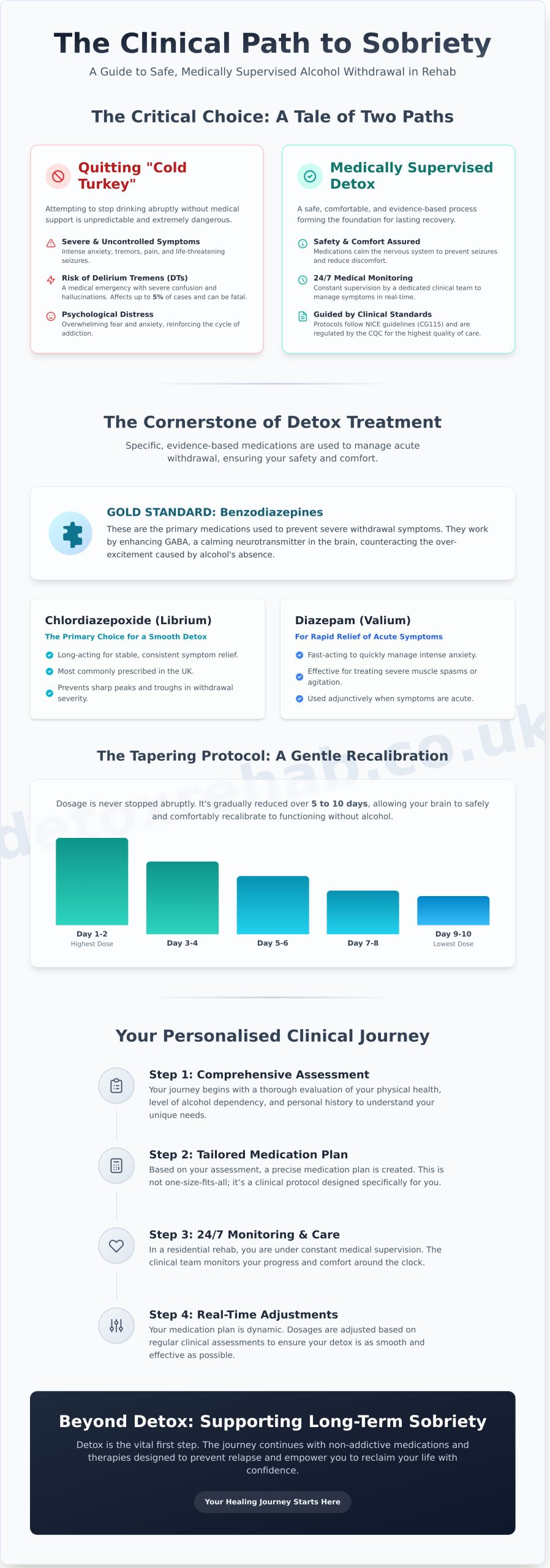
The risks of unmanaged alcohol withdrawal are severe. One of the most dangerous potential outcomes is Delirium Tremens (DTs), a medical emergency that can involve severe confusion, hallucinations, and seizures. DTs affect up to 5% of individuals undergoing withdrawal and can be fatal without immediate medical intervention. In a specialised residential unit in London, you receive 24/7 medical monitoring from a dedicated clinical team. This is a world away from a community-based NHS detox, which may lack the constant supervision required for severe dependency. Our residential protocols ensure your safety is never compromised.
NICE Guidelines: The Gold Standard for UK Alcohol Treatment
Your treatment plan isn’t based on guesswork; it’s guided by the UK’s highest clinical authority. The National Institute for Health and Care Excellence (NICE) provides a strict framework, specifically Clinical Guideline [CG115], that our London clinicians follow to the letter. This ensures the medications used in your alcohol withdrawal are prescribed safely and effectively, tailored precisely to your physical health, level of dependency, and personal history. These guidelines are the gold standard, protecting you and giving you the best possible start on your journey to a new life.
Medically managed withdrawal is the clinical process of using approved medications, under constant medical supervision, to safely and comfortably manage the symptoms of alcohol withdrawal.
Common Medications Used for Acute Alcohol Withdrawal in Rehab
Stepping into detox can feel overwhelming, but we want to reassure you that you will not be left to face withdrawal alone. The primary goal of a medically supervised detox in a London rehab is to keep you safe, stable, and as comfortable as possible. We achieve this by using specific, evidence-based medications that gently calm your central nervous system as it adjusts to the absence of alcohol.
The cornerstone of this process involves benzodiazepines. These medications are the gold standard for managing the intense and often dangerous symptoms of withdrawal, such as severe anxiety, tremors, and seizures. They work by enhancing the effects of a calming neurotransmitter in your brain called GABA, effectively counteracting the over-excitement that occurs when alcohol is suddenly removed. The medications used in alcohol withdrawal in rehab are not a one-size-fits-all solution; they are carefully prescribed and monitored by our clinical team.
In the UK, the most commonly prescribed benzodiazepine for this purpose is Chlordiazepoxide (Librium). Its long-acting nature provides a smooth and stable detoxification, preventing the sharp peaks and troughs in symptoms that can occur with shorter-acting drugs. For more acute symptoms like intense anxiety or muscle spasms, a doctor may use Diazepam (Valium) due to its rapid onset. This approach is aligned with the best practices for NHS treatment for alcohol misuse, ensuring your safety is the absolute priority. A critical part of this protocol is the taper; over a period of 5 to 10 days, your dosage is gradually and carefully reduced. This allows your brain to slowly recalibrate, minimising discomfort and preventing the risk of post-acute withdrawal symptoms.
Managing Seizure Risks with Anticonvulsants
For some individuals, especially those with a history of withdrawal-related seizures, anticonvulsant medications like Carbamazepine or Gabapentin are used. These drugs help stabilise electrical activity in the brain, offering an additional layer of protection. London doctors may opt for these medications if you have a known intolerance to benzodiazepines or if a less sedating treatment is clinically preferable for your specific situation. They work by modulating the same GABA and glutamate pathways affected by alcohol, supporting a safer detox.
Nutritional Support: Addressing Vitamin Deficiencies
Detox is about more than just managing withdrawal; it’s about beginning the process of healing your body. We use high-dose Thiamine (Vitamin B1) and sometimes an intravenous infusion called Pabrinex to prevent Wernicke’s Encephalopathy, a severe and preventable form of alcohol-related brain damage. Chronic alcohol consumption directly damages the stomach lining and intestines, impairing the absorption of crucial nutrients like thiamine, which is why up to 80% of people with alcohol dependence have a thiamine deficiency. This nutritional restoration is a core pillar of quality residential care, and our clinical team is here to create your personalised detox plan to ensure your body gets exactly what it needs to heal.
This focus on physical healing is crucial, as the effects of long-term alcohol use can extend to the musculoskeletal system, increasing the risk of injuries and nerve-related foot and ankle problems. For individuals in the UK needing to address such issues as part of their broader recovery, a specialist like Mr Ramsay Refaie Foot and Ankle Surgeon can provide expert care to help restore mobility and well-being.
Relapse Prevention: Medications for Long-Term Sobriety
Completing a medically supervised detox is a monumental first step. It’s the moment you reclaim your physical health from the grip of alcohol. But the journey doesn’t end there; it truly begins. The focus now shifts from acute withdrawal management to building a strong, sustainable recovery. A common fear we hear is about trading one dependency for another. Let us reassure you: the goal is to empower your sobriety, not to create a new reliance. The medications used in alcohol withdrawal in rehab for long-term support are non-addictive tools designed to give you a crucial advantage.
Imagine trying to rebuild a house while a storm rages outside. It’s nearly impossible. Relapse prevention medications work to calm that storm. The psychological benefit of knowing that the intense, physiological cravings are being managed is immense. It creates the mental and emotional space you need to focus on the deep therapeutic work of understanding your addiction and developing new coping strategies. It gives you a chance to breathe.
Acamprosate and Naltrexone: Reducing the Urge
Two of the most effective and commonly prescribed medications for long-term sobriety in our London clinics are Acamprosate and Naltrexone. They work in different ways to help you maintain control.
- Acamprosate (Campral): After prolonged alcohol use, your brain’s chemical signalling system is significantly disrupted. Acamprosate helps to restore the natural balance of neurotransmitters, particularly GABA and glutamate. This process reduces the persistent post-acute withdrawal symptoms like anxiety, insomnia, and general unease that so often trigger a return to drinking. It doesn’t make you feel different; it helps you feel normal again.
- Naltrexone: This medication works by blocking the opioid receptors in the brain. These are the same receptors that produce the rewarding, euphoric feelings associated with drinking. By blocking them, Naltrexone effectively disconnects the link between alcohol and pleasure. If you do drink, you won’t experience the “buzz” you expect, which helps to extinguish the craving over time. Studies have shown it can reduce the risk of a return to heavy drinking by over 20%.
The decision between these options is a clinical one, tailored specifically to you. A thorough assessment in our London facility helps determine your unique triggers and physiological profile. Naltrexone may be more suited if you are motivated by the rewarding effects of alcohol, while Acamprosate is often a better fit if you drink to relieve anxiety. This bespoke approach is informed by established clinical best practices, such as those outlined for the Outpatient Management of Alcohol Withdrawal Syndrome, ensuring your treatment plan is both safe and effective.
Disulfiram (Antabuse): The Deterrent Approach
Disulfiram, most commonly known as Antabuse, operates on a completely different principle: deterrence. It works by causing an immediate and severe negative physical reaction if you consume even a small amount of alcohol. This reaction includes flushing, nausea, vomiting, and heart palpitations. It makes drinking an intensely unpleasant experience.
Because of its powerful effects, the use of Disulfiram requires absolute commitment from you and careful supervision from our medical team. It’s a significant decision, and for this reason, it is often considered a ‘second-line’ treatment in modern London rehabs. Our philosophy prioritises helping you build a powerful, internal motivation for recovery through therapy and craving-reduction medications. However, for certain individuals who have not found success with other methods, Disulfiram can serve as a potent, tangible barrier against impulsive relapse, providing a protective shield while they strengthen their recovery skills.
The Clinical Journey: Your Medication Plan in a London Rehab
Stepping into a rehab facility can feel overwhelming, but your journey begins with a calm, structured, and deeply personal process. Your safety is our absolute priority. We don’t believe in a one-size-fits-all approach; instead, we create a detox plan that is meticulously tailored to your unique physiology and history. This process ensures your comfort and lays a stable foundation for lasting recovery.
Your clinical journey starts the moment you arrive with a comprehensive medical assessment. Our team will sit down with you to understand your drinking patterns, your physical health, and any co-occurring mental health conditions. This isn’t just a conversation; it’s the first step in building a plan just for you. Central to this is the Clinical Institute Withdrawal Assessment for Alcohol, Revised (CIWA-Ar) scale. This is a diagnostic tool our London specialists use to score the severity of your withdrawal symptoms in real-time. By monitoring ten key symptoms, from tremors to anxiety, we get an objective measure of what your body is experiencing. A score over 15, for example, typically indicates a need for immediate and robust medical intervention.
The information from your assessment and your ongoing CIWA-Ar scores directly informs your medication schedule. The specific medications used in alcohol withdrawal in rehab, often benzodiazepines like Chlordiazepoxide (Librium) or Diazepam (Valium), are prescribed based on your specific needs. Factors like your age, liver health, and the severity of your dependence dictate not only the choice of medication but also the precise tapering schedule we design to gently wean your body off alcohol.
Bespoke Care in London’s Private Sector
In London’s leading private clinics, this process is overseen by a dedicated, onsite consultant psychiatrist. This level of specialist leadership ensures the highest standard of clinical governance. We combine this medical rigour with an environment of genuine comfort, believing that a peaceful setting is conducive to healing. Your plan will also include ‘as needed’ (PRN) medications to manage any breakthrough symptoms like acute anxiety or insomnia, giving you immediate relief and peace of mind.
Monitoring and Safety Protocols
The first 72 hours are the most critical phase of detoxification. During this initial period, our nursing staff conduct observations and check your vital signs at least every 2 to 4 hours, or more frequently if your CIWA-Ar score is elevated. If you have a dual diagnosis, such as depression or an anxiety disorder, our psychiatric team manages these conditions concurrently. We understand that your mental health is inextricably linked to your recovery, and it receives equal attention from day one.
As your withdrawal symptoms subside and you become medically stable, the focus of your care begins to shift. The medications used in alcohol withdrawal in rehab are carefully reduced, and you transition from the intensive medical phase to the therapeutic part of your treatment. This is where the deeper work of healing begins, supported by a body and mind that are finally free from the grip of physical dependence. To understand exactly how our London-based medical team can create a safe and effective detox plan for you, speak with a care coordinator today.
Finding the Right Medically-Managed Rehab in London
Understanding that you need help is a monumental step. The next, finding the right clinical support in a city as vast as London, can feel overwhelming. You are not alone in this. At Detox Rehab Clinics UK, we remove the uncertainty from this critical process, connecting you directly with facilities that offer the highest standards of medical care and compassion.
Choosing the right clinic isn’t just about location; it’s about the quality of the medical supervision. A safe alcohol detox is entirely dependent on the expertise of the clinical team administering it. We ensure every partner clinic we recommend has a proven track record. We evaluate them on strict criteria, including:
- Medical Credentials: The presence of on-site, GMC-registered doctors and specialist addiction nurses available 24/7.
- CQC Ratings: We prioritise centres with Care Quality Commission ratings of ‘Good’ or ‘Outstanding’, ensuring they meet and exceed national safety standards.
- Bespoke Treatment Protocols: A facility’s ability to create a tailored detox plan, selecting the most appropriate medications used in alcohol withdrawal in rehab based on your specific health profile, usage history, and any co-occurring disorders.
For individuals facing severe alcohol dependency, the risk of dangerous withdrawal symptoms like seizures or delirium tremens is very real. In these high-risk situations, time is critical. We specialise in facilitating immediate admission, often securing a bed within 24 hours to ensure your detox begins in a safe, medically controlled environment without delay.
Why Location Matters: Accessing London’s Best Facilities
While convenience is a factor, sometimes the most effective step is a strategic one. Residential care just outside the immediate London environment can provide a vital sanctuary, removing you from the daily triggers and stresses of city life. Our Poole-based advisory team offers 24/7 support, leveraging our deep knowledge of over 300 vetted UK centres to find the perfect clinical match for your needs, whether it’s in the heart of the capital or in a more peaceful, commutable setting.
Your Path to Healing Starts Here
The journey from the fear of withdrawal to the safety of a clinical detox is profound. It begins with a single, confidential conversation. We understand the unique pressures faced by professionals in London and guarantee absolute discretion, protecting your privacy and career. Reclaiming your life is possible, and it starts with ensuring the medications used in alcohol withdrawal in rehab are managed by experts who prioritise your long-term health and well-being.
This holistic approach to well-being often involves addressing all sources of life stress. For those facing the additional pressure of securing their future in the UK, professional immigration support from a consultancy such as 1 Absolute Advisor can be an integral part of building a stable, sober life.
You have already taken the hardest step by seeking information. Let us guide you through the next one. Speak with a London addiction specialist today and let your new beginning start now.
Begin Your Safe, Medically-Guided Detox in London Today
Navigating the path to recovery can feel overwhelming, but you don’t have to face it alone. As this guide has shown, the right clinical support makes all the difference. The correct medications used in alcohol withdrawal in rehab are a vital component for ensuring your safety during detoxification and managing the challenging symptoms that can arise.
Your journey is unique, and your treatment plan must be too. We provide independent, confidential advice on over 300 CQC-registered UK centres, ensuring you find a bespoke care plan in a London clinic that’s right for you. Our compassionate support line is available 24/7, offering a direct lifeline to expert guidance. It’s time to take the first step towards healing.
Start your safe recovery journey with a free London assessment. A new beginning is within your reach, and we’re here to help you move forward with confidence and care.
Frequently Asked Questions About Alcohol Detox Medication
Is it safe to take medication for alcohol withdrawal?
Yes, taking medication for alcohol withdrawal under medical supervision is far safer than attempting to detox without it. Unmanaged withdrawal can lead to severe and life-threatening complications, including seizures and Delirium Tremens. In a professional rehab setting, our clinical team uses approved medications to manage your symptoms, ensuring your detox is as safe and comfortable as possible. This approach significantly reduces health risks.
What is the most common medication used in UK alcohol rehabs?
The most common medication used is a benzodiazepine called Chlordiazepoxide, often known by the brand name Librium. It is highly effective at calming the central nervous system, which becomes overactive during alcohol withdrawal. This helps prevent the most dangerous symptoms, such as seizures and extreme anxiety. Our medical team will assess your specific needs to determine the most appropriate medication and dosage for your detox journey.
Will I become addicted to the detox medications?
No, the risk of developing a new addiction is extremely low within our controlled clinical environment. These medications are administered on a short-term basis, typically for 7 to 10 days. Our medical staff will carefully manage your dosage on a tapering schedule, gradually reducing the amount until you are safely medication-free. This protocol is specifically designed to prevent dependency while managing withdrawal symptoms effectively.
Can I get alcohol detox medication from my London GP?
While a GP can technically prescribe these medications, it is not the recommended path for a safe detox from moderate or severe alcohol dependence. A home detox lacks the critical 24/7 medical supervision needed to manage potentially severe withdrawal symptoms. A residential rehab provides a secure environment where our on-site team can respond immediately to any complications, ensuring your complete safety.
How long do I need to stay on medication during rehab?
You will typically need medication for the first 7 to 10 days of your treatment. This period covers the most acute phase of physical withdrawal. Our clinical team creates a personalised tapering plan for you, which involves gradually decreasing the dosage each day. This ensures your body adjusts safely, and by the end of this period, you are stable and ready to engage fully with the therapeutic side of your recovery programme.
What happens if I experience side effects from the detox drugs?
Your safety and comfort are our highest priorities, and our medical team is on-site 24/7 to manage any issues. Side effects like drowsiness are common and easily managed. If you experience anything concerning, our clinicians can immediately adjust your dosage or, if necessary, provide an alternative medication. We monitor your progress closely to ensure your detox is a smooth and secure experience.
Is medication always necessary for alcohol withdrawal?
Medication is not always required, but it is the clinical standard of care for anyone with moderate to severe alcohol dependence. For those with a significant history of drinking, the medications used in alcohol withdrawal in rehab are vital for preventing dangerous outcomes. Upon admission, you’ll receive a comprehensive medical assessment to determine the precise level of clinical support you need for a safe detoxification.
How much does a medically-managed detox cost in London?
The cost for a private, medically-managed alcohol detox in London generally ranges from £3,000 to £6,000 for a comprehensive 7 to 10-day programme. This all-inclusive price typically covers your private accommodation, all prescribed medication, chef-prepared meals, and 24-hour care from our team of specialist doctors and support staff. The final cost depends on the specific clinical care your situation requires.